We talk a lot about how to spot tree risk in the form of tree location or position, but when it comes to spotting tree diseases, you need to take a closer look. Leaf spot diseases are one of the least talked about tree diseases, but they are just as important to look out for as EAB or Dutch Elm.
Plants With Spotted Leaves: Fungal Leaf Spot Treatments
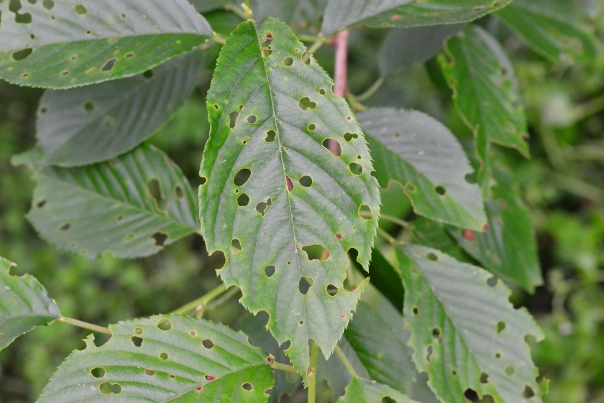
From indoor and outdoor gardeners alike, one of the most common gardening questions is, “Why do my plants have spotted and brown leaves?”. And while there are many reasons for plain old brown spots, when those spots look like little brown bull’s-eyes, the answer my friends is fairly simple, organism-wise that is. Those plant leaf spots are caused by one of nature’s most basic organisms: a fungus.
Plants with Spotted Leaves
Fungal leaf spot can be found in your outdoor garden as well as on your houseplant. Spotted leaves occur when fungal spores in the air find a warm, wet, plant surface to cling to. As soon as that microscopic spore gets comfortable in its new home, sporulation (the fungal method of reproduction) occurs and the tiny brown fungal leaf spot begins to grow. Soon the circle grows large enough to touch another circle and now the fungal leaf spot looks more like a blotch. Eventually the leaf turns brown and falls to the soil where the spores sit and wait for the next available warm, wet, plant surface so the fungal leaf spot process can begin again.
Preventing Plant Leaf Spots
There are a few easy steps you can take to prevent the problem in your garden or on your houseplant. Spotted leaves or the causal fungus need two things to flourish: moisture and poor air circulation. For your houseplant, spotted leaves can be prevented by watering the soil and not the foliage. Leave enough space between your pots for good air circulation.
How to Treat Leaf Spot Fungus
No matter how diligent you are, the day will come when those tiny brown circles appear on the leaves of your plant so it’s important to know how to treat leaf spot fungus. As soon as you see plant leaf spots, treatment begins.
For houseplants, isolate the pot immediately to prevent the fungus from spreading. Remove any leaf that has been affected. Stop misting.
In the garden, the plant’s leaf spot treatment depends on preference.
For organic treatment, there are several safe and convenient treatments available. Most contain sulfur or copper octanate. Or you can try a more traditional treatment by spraying with a mild solution of bicarbonate of soda (baking soda), using ½ teaspoon per gallon (2.5 mL. per 4 L.) of water.
For those gardeners who have no objection, many all-purpose fungicides are available. Please read the label carefully before applying.
Original post here https://ift.tt/3gpVlDj.
from AAA Tree Lopping Ipswich https://ift.tt/2YTKsDH
via IFTTT
Choosing to remove the stump of a removed tree can benefit the property in multiple ways besides the lack of them being aesthetically pleasing. Stumps left to decay for decades on a landscaped property can promote the establishment of termites and other pests including harmful fungus’s. Stumps from elm trees, maples, willow, and other vigorous species typically sprout suckers and waterspouts which can grow six feet plus a year requiring constant removal, waterspouts may also pop up from other locations on the root network such as in the middle of your lawn. Choosing to have a stump ground out is a non invasive to surrounding plants and structures which solves these problems without over compacting soil and ripping up unnecessary surrounding areas.
5 Benefits of Stump Grinding
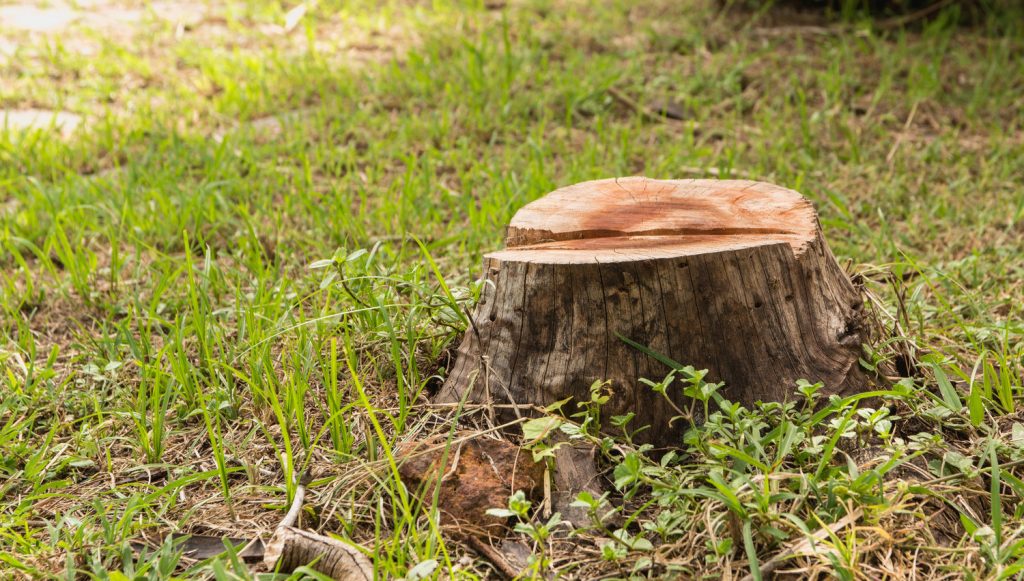
Stump on green grass in the garden. Old tree stump in the summer park.
When you have a tree cut down, chances are the stump will be left behind. Even if it’s small, you may have thought about having it removed. Here are some benefits of calling a tree services expert to grind it up.
Why You Should Get Tree Stump Removal
1. Gain Curb Appeal
Stumps are unsightly, and the eye is often immediately drawn to them. As remnants of a tree minus the lush vegetation that made them nice to look at, stumps don’t add anything visually to your property. Having them ground up gives your lawn more curb appeal.
2. Keep Your Lawn Healthier
When left around, a stump may begin to rot. Any fungus or mold growing on it can transfer to the lawn, or nearby trees, bushes, and flowers. By removing it, you instantly boost the health of all plant life in the immediate vicinity.
3. Free Up Space
Stumps are bulky, and they often take up a decent chunk of space. This is space that could be used to plant new trees, plant gardens, set up hardscapes, build gazebos, or invest in many other improvements. Have a tree services expert remove the stump, so you have room for something better.
4. Deter Pests
A stump on your property is bound to attract termites, beetles, and other wood-boring insects. If you want to stop these critters from crawling around on your property, remove the stump that’s attracting them.
5. Remove a Trip Hazard
Because of their low profile and far-reaching roots, stumps can be a tripping risk. They’re especially dangerous for children, the elderly, or anyone with mobility issues. By getting a tree services expert to remove yours, you make your yard safer and avoid potential liability.
Original post here https://ift.tt/2NR2foB.
from AAA Tree Lopping Ipswich https://ift.tt/2VEjnm5
via IFTTT
Without a doubt, you’d never put your tree in harm’s way. Or at least, not on purpose.
You might be unaware of some small actions that can hurt your tree big time. And, that’s OK! The important thing is that you find out what is bad for trees now so you can make the best decisions later.
Getting Green: 5 Ways You May Be Harming Your Yard and Trees
Many people are shocked when they find out how much value landscaping can add to your home. Even if you aren’t a gardener at heart, a properly maintained yard and leafy, healthy trees can increase your property’s value by thousands of dollars. Even if you’re not looking to sell your home, it’s important to maintain the integrity and health of your landscaping, since it can take years to undo the damage of neglect. But can you also love your lawn too much? There are many things homeowners do believe that it will benefit their landscaping, when in reality, they may be hurting their yard and trees.
Overfeeding
One of the issues we often encounter is overfeeding. Giving your lawn too much fertilizer or improperly spreading and diluting it can result in fertilizer burn. This is one of the quickest ways to kill your lawn, and you’ll know pretty quickly if you’ve done since your lawn will suddenly be covered in ugly, dead, brown patches. To prevent this, use organic fertilizer and follow fertilizer instructions.
Planting right up to the trunk
While you may like the look of a green lawn that goes right up to the trunks of your trees, they certainly won’t. Planting your grass like this can cause mower damage to the trunks or roots of your trees and soil compaction. It’s best to maintain a mulch layer that extends past the tips of the branches to protect your trees’ trunks.
Too much (or too little) water
Overwatering or underwatering your lawn and trees can result in yellowing, foliage dropping, and dieback. The first year you plant sod or a tree is a critical time for growth and establishment. Make sure you water regularly (at least on a weekly basis) but don’t leave the earth sodden.
Letting Rover Go Where He Chooses
We understand that it can be a pain to go out with your dog or guide him as to where he should relieve himself, but it’s important to avoid having him go on your lawn unless you want it spotty and dead. Dog urine contains nitrogen, which can kill grass. Your dog’s urine contains so much nitrogen because of all the protein they eat.
To prevent “pee burning”, control where your dog goes with leashes or fencing. If he must pee on your lawn, water it afterward to dilute the urine.
Pesticides and herbicides
Getting rid of weeds is essential to the health of your lawn. Ignoring weeds one year could mean that you will experience an explosion of weeds the following year that could quickly take over and kill all your grass. That being said, your lawn does not like pesticides or herbicides. These poisons don’t distinguish between a good bug or a bad
bug or good plants and bad plants; they just kill. Even using herbicides nearby can still negatively affect your lawn.
To prevent issues, it’s best to avoid herbicides altogether and use alternative methods such as manual removal and be sure to do it when the ground is wet since it’s easier to remove the complete root system.
Original post here https://ift.tt/3ggxcig.
from AAA Tree Lopping Ipswich https://ift.tt/2VEgbH8
via IFTTT
A pole saw can come in handy for easy to reach limbs that need a quick trim, but knowing where to draw the line on DIY tree work can be a bit more complicated. We want you and your trees healthy and happy that’s why we created a Do’s and Don’ts list when it comes to do-it-yourself tree work!
Tree Care – DIY Or Call A Pro?
Did you know that – just like human beings — trees can feel stress? Newly planted young saplings or any trees growing in an urban setting are especially vulnerable. And a stressed-out tree is not a healthy tree. So keep the trees on your property with a hearty helping of TLC. If you’re the green-thumbed type, you may want to do a lot of tree care yourself, although some of the work is better left to an arborist or professional landscaper. Read on to find out which tree care tasks you can DIY … and when to call a tree service pro.
Planting
DIY: Selecting and planting a young tree is a fun and rewarding DIY task. There’s something about planting a tree in your very own yard that says, “This is my home.” Get the kids on board and take plenty of photos. TIP: Before you dig a hole for your new tree, contact a one-call number to make sure you won’t be hitting any underground utility lines.
Call a Pro: For large-scale planting, such as when you’ve just moved into a new house with a lot of outdoor space, call a pro. Experienced landscape contractors have both the know-how and the equipment to install trees and other plants quickly and well. Even before planting begins, a professional landscaper will be able to remediate construction-damaged soil to ensure healthy growth.
Feeding and Watering
DIY: It’s not only garden plants that need fertilizer treatment. Trees also benefit from occasional feeding. Fertilize once annually, in April-May (after the last frost) or October for healthier, hardier trees, which will stand up better to storms and winds. As a DIYer, you can feed your trees by either broadcasting fertilizer or inserting a spike in the soil. You’ll have to water, as part of your tree care program, until young trees have been established for 2 years. Excessively dry weather may make watering older trees necessary, as well.
Call a Pro: Consult a landscaping expert to find out the right kind of fertilizer for your trees and soil type, as well as the best application method. Ask about when to water or use other methods of keeping roots moist, such as mulching. If you are busy (or forgetful!), consider setting up an ongoing tree service plan with your landscaper.
Protection
DIY: We humans are not the only tree lovers; many animals enjoy them too … as a tasty meal! Protect tender tree trunks from hungry deer and rodents with a store-bought plastic tree guard or a homemade version, fashioned from chicken wire or bark cloth. Shelter young trees and bushes from winter snowfalls with teepee-like frames or burlap wrappings.
Call a Pro: You’ll be better off enlisting the help of a pro when it comes to safeguarding your trees from ruthless insect pests, such as the emerald ash borer or spider mites. Another type of tree protection to ask your landscaper about is preventing collisions by mowers and other lawn care equipment. (Surrounding each tree with a circle of mulch and some form of barrier is often advised.)
Trimming and Thinning
DIY: As a home gardener, you might want to try your hand at Tree Trimming 101. Don’t just charge in there, though, or you may do your tree more harm than good. Slow down and start by learning the basic cuts. Tackle only pruning work that you can do standing safely on the ground.
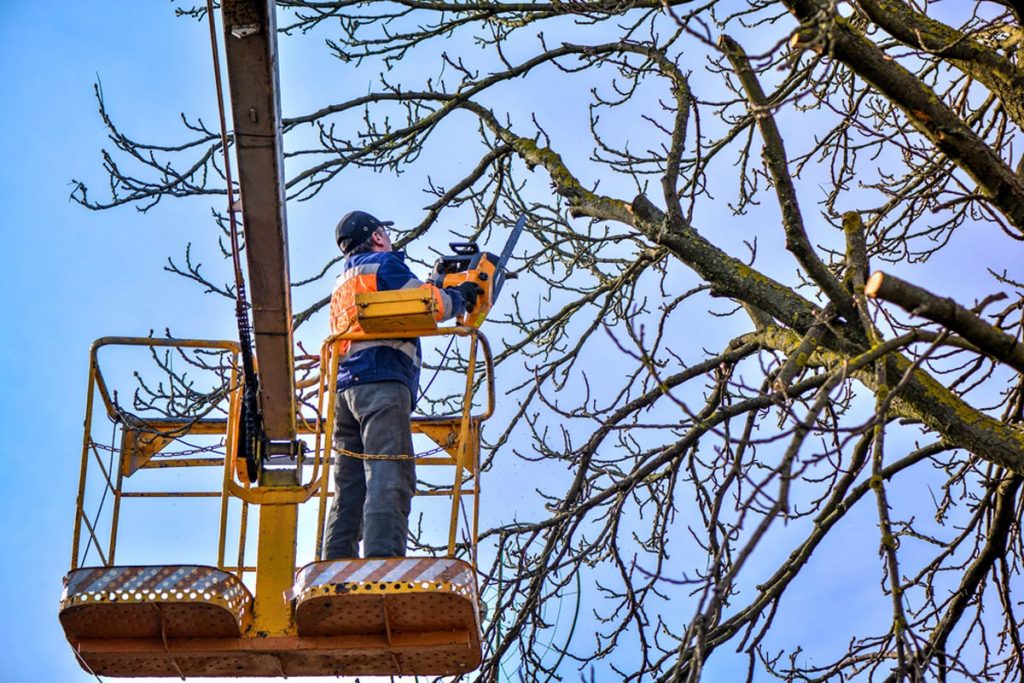
Call a Pro: Leave major tree trimming jobs to the experts. A good rule of thumb is that any tree trimming work which requires a ladder — or a lift — is a job for tree service pros.
Besides branch trimming, fruit and nut trees need a special kind of tree care. They should be thinned every year in early summer; that means removing a certain amount of unripe fruit so that the remaining apples, plums, or pears will mature to a good size and flavor. We recommend having a pro do this at least the first time. If you watch and learn, you can try it yourself next year.
Original post here https://ift.tt/2ByXpK6.
from AAA Tree Lopping Ipswich https://ift.tt/3dX6Xvz
via IFTTT
As the weather gets colder, it is the time of year to be aware of major snow events and understand the impact that these storms can have on your trees. The buildup of snow, and precipitation that turns to ice, can be too heavy for some trees and can produce the dreaded “crack” resulting in critical damage.
Protect Your Trees From Freeze
Temperatures below 32 degrees over a sustained period of time are cold enough to freeze your trees’ buds/blossoms, fruit, leaves, and/or twigs.
Trees most susceptible to damage:
Citrus, Jacaranda, Catalpa, Oleander, Eugenia, and other tropical/sub-tropical plants are most likely to sustain damage. Tender, new growth is also easily injured by freezing temperatures.
Acute action before freezing weather:
Protect your trees and plants:
Cover susceptible trees and plants with burlap, sheets, tarps, etc., that extend to the ground to trap in the earth’s accumulated warmth. Use a frame or stakes to minimize contact between the cover and the foliage.
Bring potted plants and trees to more protected locations.
Keep plants well-watered:
Moist soil will absorb more solar radiation than dry soil, and will re-radiate heat during the night.
If you have a large tree that needs protection, running sprinklers at the coldest time of the day (usually between 4:00AM and 6:00AM) can give it a slight edge. The strategy makes use of latent heat released when water changes from liquid to a solid. When ice crystals form on the leaf surface they draw moisture from the leaf tissue. The damage from this dehydration will be less severe if the plant is not already drought-stressed.
Advanced planning for freeze
Remove turf/weeds from under trees’ canopies—bare soil absorbs and reflects heat best.
Wood chip mulch prevents soil moisture loss and insulates roots.
Plant frost-sensitive plants near sources of reflective heat (like buildings, walls, etc).
Action after a freeze
Help trees recover:
Do not prune anything off immediately. Wait to see what sprouts in the spring; the damage is often not nearly as bad as it initially looks, and new growth may come out of tissue that you thought was dead.
If dieback is severe enough and your tree has lost “shade,” protect the now-unshaded portions of the trunk/branches from the sun, with a physical cover or with whitewash (1:1 ratio of latex paint and water).
Remove frosted/mushy fruit while still salvageable, for snacking on or juicing.
Original post here https://ift.tt/2VGJw3D.
from AAA Tree Lopping Ipswich https://ift.tt/38sEv3S
via IFTTT
Hiring a professional to trim just one tree can cost $80 to $1,000+, with $250 to $500 being the typical price range for tree trimming. If the trimming is straightforward, you could be quoted $80 for a small tree under 25 feet tall, or $175 for a medium-sized tree 25 to 50 feet, and $300 to $1,000 for a big tree over 50 feet. Keep in mind that those prices cover a one-time service for just one tree. If you’ve got several trees around your house that need trimming, the bill will go up accordingly.
2020 How Much Does an Arborist Cost?
How much does an arborist cost? Arborists have many skills, ranging from tree consulting, tree reports to tree surgery, or removing trees from properties. Here’s what you need to know about what arborists do and how much their services will cost.
What does an arborist do?
Arborists can do almost anything related to trees. Some of the jobs arborists typically do include:
Tree consulting and tree reports
Tree removal
Stump grinding
Tree pruning
Tree surgery
Log splitting
Root management
Each of these jobs is a separate service and will come with a separate cost. For example, if you want to have a tree removed, it probably won’t include stump grinding or stump removal.
Root management includes cutting roots back or creating a barrier so a root cannot impede on a driveway or house slab. Log splitting can be done if you have a wood fireplace and want the timber for burning. Tree pruning and tree surgery are slightly different. Tree pruning can remove limbs that overhang the house or dead limbs, while tree surgery involves removing diseased limbs to keep the tree healthy.
In general, arborists charge around $70 per hour, but their hourly rate may not reflect the cost of the job. The cost will depend on other factors and the number of workers who need to be on the job. If other equipment is needed, such as a truck hoist to reach tree branches, it will cost extra. Truck hoists usually cost around $170 per hour and the hoist may be needed for longer than one hour.
How much does tree consulting and reports cost?
Tree consulting and tree reports are two services an arborist can provide. A tree consultation will give information about a variety of things:
Is the tree diseased and can the disease be cured?
Advice on what types of trees to plant.
Valuation reports tell how much a tree is worth.
Public liability and public safety reports can tell you if a tree poses a danger to the public or a neighboring property.
Root mapping can find out if a tree’s roots pose a danger to underground pipes or a home’s foundation
Tree surveys help identify how to best maintain trees.
Tree reports can be a little different than a tree consultation, though the terms are often used interchangeably. Tree reports may be submitted to the council if you want to remove a tree from your property. Many trees in Australia are protected, but different councils protect different trees. A tree report can identify the tree and submit reasons for its removal to the council.
In general, an arborist consultation or report will cost:
$75 to $100 for one to five trees
$25 for each additional tree
$35 for submission to council fee
The cost may vary depending on circumstances, but these are the basic costs for a consultation or report.
How much does tree removal cost?
Tree removal will depend on a variety of factors:
The size of the tree
The condition of the tree
The location of the tree
Ease or difficulty of access
Needed safety precautions
Transportation and tipping fees
A large tree will cost more because it has to be cut from the top down. If the tree is in poor condition, extra steps will be needed to ensure safety. The location of the tree is an important factor because trees that hang over neighboring properties or over a roof will need to be cut carefully and branches cannot be allowed to fall. If a tree overhangs a roof, for instance, the branches will need to be secured so they don’t fall on the roof. If any safety precautions are needed, they will factor in the cost.
Because of the complexity of tree removal, the cost can be anywhere from $300 for a simple job to $10,000 or even more. An arborist will have to inspect the tree before they can give a quote. While $10,000 can seem excessive, it can be necessary in some cases when a large tree must be removed from the top down and branches cannot fall to the ground.
How much does stump removal cost?
Like tree removal, stump removal will depend on the size of the job, access problems, and other factors. Special stump grinding equipment is used, but an extensive root system may also require some digging. Stump removal can cost up to $800 or more depending on the project. On average, stump removalists charge around $35 per hour. A small job may only take two or three hours to complete. A larger job can take much longer and if more than one stump needs to be removed, that will factor into the cost as well. On average, stump removal costs between $350 and $800, but smaller jobs will cost less.
Keep in mind that stump removal is not usually included in the cost of tree removal. If you want both, ask for quotes for both tree removal and stump removal. It can save you money because the arborist will come with equipment for both jobs instead of having to return to do the stump removal.
Also, remember that stump grinding and root removal maybe two different jobs. Stump grinding usually involves getting rid of the exposed stump, while root removal involves taking out the whole root system. Root removal can cost more than stump grinding, but an arborist will have to inspect the tree before they can give a quote.
How much do tree pruning and tree surgery cost?
As with everything an arborist does, tree pruning and tree surgery will depend on the size of the tree. For smaller trees, they may charge an hourly rate of $35, but you will also need to pay for travel and setup time. For larger trees, the cost can be much higher, with costs between $500 and $2000. The reason for the high costs can be because the arborist will have to:
Climb the tree to remove branches
Take personal safety precautions
Remove branches without letting them drop to the ground
There may also be accessibility problems and other factors that affect the cost. If tree surgery is needed, you may also have to pay for an initial consultation.
Choosing an Arborist
Arborists do not require licensing, so you should be careful when choosing an arborist. Their job can be dangerous to the public and the arborist, so should carry public liability insurance and personal insurance. They should also hold a Certificate II or III in Horticulture (Arboriculture) and be a member of a recognized organization such as Arboriculture Australia.
The arborist should be well established in the area and have a good safety record. They may be able to supply you with references. Check their references and find out if the arborist knows what they’re doing and has a good safety record. Choose the best arborist you can find, especially if you have large trees that need pruning or removing. An expert will be able to do the job safely and efficiently. Don’t trust any job to an amateur.
*Costs and prices in this article are indicative and should only be used as a guide. They also vary locally and are subject to market forces.
Original post here https://ift.tt/2SUbh7o.
from AAA Tree Lopping Ipswich https://ift.tt/2SU4n1N
via IFTTT
Tall trees are magnificent structures that provide ample shade, as well as a large habitat for many varieties of animals. Like all trees, tall trees must be trimmed and pruned occasionally to keep them in optimal health, and also for safety reasons. If one of the tree’s limbs dies or becomes too heavy, it could break away from the trunk, causing injury to nearby persons and damage to property. While it is recommended that you hire a tree-trimming company to deal with extensive tree trimming for safety reasons, you can perform small pruning tasks yourself.
HOW TO TRIM LARGE TREE BRANCHES
If you’re trimming heavy tree limbs, you have to be extra careful not to damage the bark or interfere with the tree’s natural healing response. Doing it right is actually no more difficult than doing it wrong, particularly if you think ahead to how much work it would take to remove a dead tree!
Here’s how to cut large tree limbs in your yard in three simple steps.
How Trees Heal
The truth is, trees don’t actually heal as we do. When you cut off a tree branch, the tree forms a special callous tissue (like a scar) that covers over the wound to keep out disease and decay. That scarred part of the tree will be there forever, sealed off so that the rest of the tree can keep growing. It’s very important to prune trees correctly so that we don’t interfere with this process – incorrect pruning will leave the tree weak and vulnerable to disease.
In the top photo, you can see the evidence of several large pruning cuts. The bumps show well-healed pruning scars, most of them completely covered over. The “donut” shaped scar is normal, too. The callous tissue grows from the outside edges toward the center, so it’s still in the process of sealing over.
How to Cut a Tree Limb
Proper pruning of large tree limbs involves three cuts:
Cut #1, Notch Cut: Cut a small notch in the bottom of the limb, 2-3 feet away from the trunk, and about a quarter of the way through. This notch will keep the bark from splitting when you make the next cut.
Cut #2, Relief Cut: Just outside the notch, make a relief cut completely through the branch. This removes the weight of the branch, so that you can make your final cut without the branch splitting and falling.
Cut #3, Final Cut: This is the one that matters! Your final cut should be right where the branch collar (that swollen bump) transitions to smooth branch bark. Follow the slant of the branch collar. If you can’t fit your saw into the crotch at the right angle, then cut it from the bottom up.
Common Tree Trimming Mistakes
Cutting the Branch Too Short: We used to think that branches should be cut off flush with the trunk – boy, were we ever wrong! The branch collar is responsible for forming the scar tissue. If you cut into the branch collar, the tree will have a very hard time recovering. When you see rotten holes in tree trunks, or seeping wounds, you’re looking at the aftermath of cutting off the branch collar.
Leaving the Branch Too Long: The branch collar on the truck can only do its job of allowing the wound to heal if all of the branch that it has to cover over has been removed while leaving the branch collar itself intact. In the photo on the right, you can see how the branch stubs that were left too long are interfering with and actually preventing the healing process from taking place.
Failure to Make the Relief Cuts: If you fail to make the relief cuts and remove most of the weight of the limb before trimming the branch back to the trunk, you run the risk of having the branch split off. This can cause substantial damage to the trunk, as seen in the photo at right. This can make the wound on the trunk susceptible to disease and insect infestation and take much longer to heal.
Original post here https://ift.tt/2Lnxq9L.
from AAA Tree Lopping Ipswich https://ift.tt/3fElWN6
via IFTTT