Wednesday, October 7, 2020

What Kills Trees Quickly

Written by Ticara Gailliard and published on https://www.hunker.com/.

Trees are typically prized within landscapes for their attractive appearance and sometimes for the shade or fruit they provide. When a tree is diseased, unattractive, invasive, has outgrown the site or is simply no longer desired in a certain position, however, a homeowner may opt to remove or kill the tree. Herbicide use can generally expedite the tree killing process, though it is not necessary.

Quick Ways to Kill Plants & Trees

Manicured gardens are a thing of pride and beauty, but sometimes invasive or unwanted plants and trees crop up where they shouldn’t. When this happens, choose one of several methods for killing plants and trees, either naturally or chemically. When deciding on which method to use, be sure to keep in mind that you could accidentally kill wanted plants.

Over- or Underwatering

Excessive watering of many plants is a surefire way to kill them. Unless a plant is aquatic or very tolerant of wet soil, too much water will cause the plant to die off. Novice gardeners often overwater for fear that they aren’t watering their plants enough. On a similar note, neglecting to water plants, especially indoor plants that don’t benefit from natural precipitation, will also lead to their demise. Few plants can survive very long without water, and denying a plant necessary water causes it to dry up and die.

Girdling and Paving

A method of killing trees specifically, girdling involves stripping the bark from around the circumference of the tree. When the bark is removed, the tree cannot disperse the food created in its leaves down to its roots. This method of killing a tree takes a few weeks to work. Similarly, paving over a tree cuts off access to the roots as well, which will eventually kill the tree completely.

Salt and Vinegar

Both salt and vinegar effectively kill off plants. Salt dehydrates plants when water is added, causing them to die. Vinegar, when mixed with water, can be sprayed onto plants and around the soil to soak into the roots. However, with both substances, care must be taken. Salt can damage the ground and make it hard for anything else to grow there for a long time. Vinegar may not corrupt the soil, but it may kill plants that you want to keep. To avoid this, surround the unwanted plants with some kind of barrier, such as a cut two-liter soda bottle, and spray directly within the area.

Chemicals

Getting rid of unwanted plants and trees can be as simple as digging into your household cleaners. Borax, WD-40 and bleach all prevent plants from growing and will kill them. Once the chemicals have killed the unwanted plants, dig them up and dispose of them to prevent them from rooting again. As with salt and vinegar, care should be taken to ensure that wanted plants aren’t affected.

Original post here https://ift.tt/3nu3yuc.


from AAA Tree Lopping Ipswich https://ift.tt/30JqJHo
via IFTTT

Do Trees Grow Back From Stumps?

Written by Brian Barth and published on https://homeguides.sfgate.com/.

Your faithful old tree has finally fallen. Maybe it got too sick or it was struck by lightning. In any case, most dead trees are reduced down to stumps. After that happens, you might have an odd question: can a tree grow back from a tree stump?

Can Stumps Grow Back?

Gardeners often fret over plants that are hard to grow, but plants that are hard to kill pose another challenge. The stumps of most woody species regrow after they are cut, and some tenacious trees and shrubs sprout again and again, even if they are repeatedly cut to the ground. Almost all deciduous species possess this trait to some degree, though it is not as common among evergreen coniferous shrubs and trees.

Stump Sprouting

Stump sprouting is a natural mechanism for plant regeneration. It allows a forest to return after a fire and prevents the death of saplings after they have been browsed by deer. A root system stores some of the energy produced in photosynthesis and directs it into new growth from the stump. Stump sprouting can be managed intentionally to create shrubby forms of large trees and to stimulate the growth of long, straight sprouts to harvest as fence posts, garden stakes and decorative materials.

Inherent Problems

A tree that has a single trunk makes numerous sprouts after it has been cut so only a stump remains. If the sprouts are allowed to grow, a multitrunked tree develops over time, with the long limbs growing at an angle to the stump. Those new trunks are prone to storm damage, often cracking at their connection to the stump. Repeated cutting worsens the problem. All new foliage generates energy that is stored in the roots, which is why some stumps seem to sprout indefinitely. The root crown gets bigger every year in a tree or shrub managed this way, making digging out the stump more difficult that it would be otherwise.

Mechanical Control

If all new growth is removed as soon as it emerges from a stump, the energy reserves in the root system become exhausted and the plant dies. Mowing the sprouts of a stump in a lawn achieves the goal, though the stump must be cut flush to the ground for the mower to pass over it. Remove the stump of a small tree or shrub with a shovel and pick ax. Using a backhoe or stump-grinder is the only option for removing a large tree stump. When using tools or equipment that causes wood chips to fly into the air, be sure to wear protective eyewear.

Chemical Control

A broad-spectrum herbicide, such as glyphosate, offers a less laborious solution for killing a stubborn stump. Do not dilute the glyphosate and use it in the concentrated form. Paint the herbicide on the all surfaces of the stump late in the growing season for the best results. Injuring the stump, or trunk, by drilling holes or hacking into it with a hatchet allows better penetration of the herbicide chemical to the actively growing plant cells. Once the chemical enters the plant’s “blood stream,” it is distributed quickly throughout living tissues, and the plant is unlikely to live another season.

Original post here https://ift.tt/34wSILv.


from AAA Tree Lopping Ipswich https://ift.tt/3iI36VE
via IFTTT

Can Tree Roots Damage Your House Foundation?

Written by Edens Structural Solutions and published on https://edensstructural.com/.

You want your home to look so stunning that it makes the neighborhood talk. And to your knowledge, you have accomplished just that. Your yard boasts a verdant lawn, lush flowerbeds, and a group of gorgeous, mature trees. You have placed everything just so for maximum aesthetic effect.

However, you’ve notice those trees’ roots growing ever closer to your foundation, your driveway, or your main sewer line, and you feel a little nervous. You’ve heard stories about tree roots breaking through these items and causing expensive repairs-and you don’t want to share in that experience.

When Trees Attack: How Tree Roots Damage Your Foundation

Everyone loves the look of a majestic tree in the front yard or supporting a tree house for the kids out back, but might that tree pose certain risks for your home? Under certain circumstances, an otherwise desirable tree can pose a significant threat to your home’s foundation.

Here’s what you need to know about the risks, and what you can do to prevent problems down the road.

How tree roots affect the soil

Tree roots are very powerful — even small, newly forming roots. Because they are driven to find more sources of water and nutrients, tree roots constantly extend themselves in the search. What happens as a result of these movements depends on the kind of soil the tree is planted in.

When Trees Attack: How Tree Roots Damage Your Foundation

There are two primary types of soil that will can be substantially affected by tree growth, and the effects are different for them. The first is soil composed primarily of clay. Clay soils compact easily, and become more densely packed as tree roots push through them.

Soil that consists of loose dirt and rocks, on the other hand, simply tends to shift and become displaced, which allows roots to move through it more easily. It’s highly useful to know which type of soil your home sits on because that should tell you the kind of damage that tree roots may have in store for your residence.

Another way that trees can affect the soil beneath them relates to prevailing weather conditions. During droughts, roots may shrink as clay soils dry; during heavy rains, the roots may expand as they absorb water. Both shrinkage and expansion can damage the structural integrity of soil.

Concrete settling and foundation damage

To be fair, tree roots themselves are not the direct cause of foundation damage, though many homeowners believe they are. Instead, the changes in the condition of the soil are what actually cause most of the damage to home foundations.

This most often manifests itself in the form of concrete settling. In many situations, concrete settling is only unsightly, but sometimes it can also be dangerous.

When Trees Attack: How Tree Roots Damage Your Foundation

When concrete settles, it is more likely to shift and crack. Depending on how significant the movement is, the overall structure of your home may be affected. If concrete only cracks due to root activity, homes — especially newer homes — may not be disrupted at all.

When concrete shifts because of settling, residential foundations may be more substantially impacted. In extreme cases, particularly with older homes, the entire house structure may suffer damage.

Support beams may shift, walls may sink or crack, and ceilings may become uneven. Though concrete settling is not always a hazard, too often it can cause basic structural damage in older homes.

Other causes of foundation damage

It’s all too easy to blame trees for causing foundation damage because industrial societies regard them as invaders in developed areas. But there are many human interventions that can cause foundation damage.

When Trees Attack- How Tree Roots Damage Your Foundation 3

Such factors include poorly insulated basements, gardens planted by homeowners, and drainage pipes. All of these can cause soil dehydration and concrete settling.

How to prevent root-related damage

If you’re concerned about the potential for roots damaging your foundation, you can take a number of steps to protect yourself. In most cases, concerns arise after the foundation has been laid and nearby trees have already been long in place.

One way to address the issue is to build a root barrier. In order to do so, you may have to dig all the way down to the base of your home’s foundation. You can cut away roots that are approaching your foundation while you’re digging for the barrier.

The process can be a hassle, but it’s better than merely trusting that your home will be left undamaged by weather cycles and root growth.

If you’re determined to plant a new tree in your yard, another way to subvert the threat of root damage is to select a slow-growing tree species that has less aggressive rooting tendencies. Steer clear of willows, silver maples, and elm trees that spread deep and insidious roots, and go for oak or sugar maple trees that grow more slowly.

Another way to prevent tree roots from causing damage is to reconsider your plans for tree planting in the area around your home. One of the main issues to consider before planting a tree is how large your yard is.

It’s a common belief that a tree will develop roots as broad as the tree is tall, but this is a misconception that underestimates the facts. Actually, a tree can develop roots that are two to three times its height.

If you can’t provide adequate space for the tree’s roots, then you should think about trying something smaller or a different landscaping option altogether.

If you’re building a new structure, you can take a number of steps to prevent root damage in the future. One of the most common causes of foundation damage is an insufficiently deep foundation.

This is why homes with full basements are far less vulnerable to root damage and concrete settling than older homes built on shallow foundations. Those shallow foundations are far more vulnerable to dried-out soil conditions and shifts, whereas full basements offer significant structural protection.

Don’t start cutting down trees immediately if you’re worried about invasive roots. This is often unnecessary and it can be avoided by using such strategies as a root barrier.

An analysis of your soil type and foundation status can also demonstrate that roots are not a major threat to your home. Cutting down trees should only be a last solution to a potential root problem.

Get foundation repair assistance

If you’ve noticed foundation damage and suspect tree roots, soil changes, or concrete settling, contact Edens Structural Solutions today! Our team of professionals can help you assess any concerns you have about your foundation, and we offer a variety of repair options.

Contact us for your free consultation. We will examine your property, foundation, and any potential damage, and develop a suitable plan of action for your home or business.

Original post here https://ift.tt/3gpVlDj.


from AAA Tree Lopping Ipswich https://ift.tt/30I2tWe
via IFTTT

Tree Pruning Tools

Written by Precision Tree and published on https://www.precisiontreemn.com/.

The 1st step of doing great tree trimming is having the right tools. Great tree trimming can’t be done with a pair of scissors or a hack saw because the right tools keep the tree healthy and looking great. The best reason to have the right tools is your safety because you can’t take care of your trees unless you take care of yourself.

5 Must-Have Tree Pruning Tools

Pruning not only helps keep your landscaping beautiful, but it’s also necessary to promote tree growth and health. In order to do your best pruning, you’ll need the right tools to get it all done.

Here’s Our List of Must-Have Tools for Pruning Trees:

1. Pruning shears (or pruners, clippers or secateurs)

These are probably the most-used tool when it comes to pruning shrubs, flowers, vines, and small growth on trees. Pruning shears are hand-held and can cut branches and twigs up to ¾ of an inch thick.

There are three basic types of pruning shears: anvil, bypass, and ratchets.

A bypass is the most popular of the three and acts like scissors. It is good for growing stems.

Anvil pruners feature a straight blade that uses a splitting action. They work well for dry branches and stems.

Ratchet pruners are similar to anvil pruners, but they feature a mechanism that cuts in stages. Ratchet pruners are good for those who don’t want to strain their wrists. GardeningProductsReview.com has an article on the best hand pruners complete with information on many different brands.

2. Loppers

Great for branches up to 2 ½ inches thick and are especially useful for pruning fruit trees, nut trees, and vines. This tool is really similar to a pair of hand shears but the blades are thicker and the handle is much longer. Loppers also come in anvil, bypass and ratchet styles.

3. Pruning Saws

Next in the pruning tool lineup is a pruning saw which is capable of taking on branches from 1 ½ to 5 inches in diameter and are available in many different styles.

4. Hedge Shears

Hedge shears are great if you have hedges, small shrubs, evergreens, or deadheading perennials. They can be used on any hedge shrub and cut branches up to 2 ¼ inches thick.

5. Pole Pruner

To reach dead wood in trees or for light pruning, a pole pruner (tree pruner) is a must-have. Pole pruners can generally be used on any tree and can cut through branches up to 1 ¼ inch in diameter. The best part is that most pole pruners can reach 8 feet or more, eliminating the need for a ladder in many cases. It’s also important to note that there are electric pole pruners, too.

Caring for Your Tools

Having the right tools isn’t any good if they aren’t kept in proper working order. Keeping them clean is a top priority. Not only can tree sap gum everything up, but tree diseases can spread from tree to tree. Carry a rag in your pocket to wipe down blades between uses, and if you’ve been pruning diseased branches, wipe down the blade with alcohol before moving on to another plant.

Also, keeping blades sharp is very important. The Family Handyman has a great article with instructions on how to sharpen pruning shears and other garden tools.

Original post here https://ift.tt/3gpVlDj.


from AAA Tree Lopping Ipswich https://ift.tt/30HBGJy
via IFTTT

Why is Tree Planting Important?

Written by Savatree and published on https://www.savatree.com/.

Since the beginning, trees have furnished us with two of life’s essentials, food and oxygen. As we evolved, they provided additional necessities such as shelter, medicine, and tools. Today, their value continues to increase and more benefits of trees are being discovered as their role expands to satisfy the needs created by our modern lifestyles.

Climate change, global warming, climate protests – these are not just buzz words, these are the words used by the younger generation to raise their concerns about our environment and it is time that everybody started listening to their message. There is a growing movement around the world that is focusing on protecting the earth for future generations and every action counts. You don’t need to protest on the streets to make a contribution to the survival of our planet, planting trees can go a long way towards restoring the health of the earth.

Importance and Value of Trees

Since the beginning, trees have furnished us with two of life’s essentials, food and oxygen. As we evolved, they provided additional necessities such as shelter, medicine, and tools. Today, their value continues to increase and more benefits of trees are being discovered as their role expands to satisfy the needs created by our modern lifestyles.

Community & Social Value

Trees are an important part of every community. Our streets, parks, playgrounds and backyards are lined with trees that create a peaceful, aesthetically pleasing environment. Trees increase our quality of life by bringing natural elements and wildlife habitats into urban settings. We gather under the cool shade they provide during outdoor activities with family and friends. Many neighborhoods are also the home of very old trees that serve as historic landmarks and a great source of town pride.

Using trees in cities to deflect the sunlight reduces the heat island effect caused by pavement and commercial buildings.

Complimentary Consultation

Ecological & Environmental Value

Trees contribute to their environment by providing oxygen, improving air quality, climate amelioration, conserving water, preserving soil, and supporting wildlife. During the process of photosynthesis, trees take in carbon dioxide and produce the oxygen we breathe. According to the U.S. Department of Agriculture, “One acre of forest absorbs six tons of carbon dioxide and puts out four tons of oxygen. This is enough to meet the annual needs of 18 people.” Trees, shrubs and turf also filter air by removing dust and absorbing other pollutants like carbon monoxide, sulfur dioxide and nitrogen dioxide. After trees intercept unhealthy particles, rain washes them to the ground.

Trees control climate by moderating the effects of the sun, rain and wind. Leaves absorb and filter the sun’s radiant energy, keeping things cool in summer. Trees also preserve warmth by providing a screen from harsh wind. In addition to influencing wind speed and direction, they shield us from the downfall of rain, sleet and hail. Trees also lower the air temperature and reduce the heat intensity of the greenhouse effect by maintaining low levels of carbon dioxide.

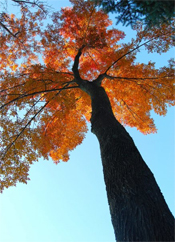
Autumn Tree

Both above and below ground, trees are essential to the eco-systems in which they reside. Far reaching roots hold soil in place and fight erosion. Trees absorb and store rainwater which reduce runoff and sediment deposit after storms. This helps the ground water supply recharge, prevents the transport of chemicals into streams and prevents flooding. Fallen leaves make excellent compost that enriches soil.

Many animals, including elephants, koalas and giraffes eat leaves for nourishment. Flowers are eaten by monkeys, and nectar is a favorite of birds, bats and many insects. Animals also eat much of the same fruit that we enjoy This process helps disperse seeds over great distances. Of course, hundreds of living creatures call trees their home. Leaf-covered branches keep many animals, such as birds and squirrels, out of the reach of predators.

Personal & Spiritual Value

The main reason we like trees is because they are both beautiful and majestic. No two are alike. Different species display a seemingly endless variety of shapes, forms, textures and vibrant colors. Even individual trees vary their appearance throughout the course of the year as the seasons change. The strength, long lifespan and regal stature of trees give them a monument-like quality. Most of us react to the presence of trees with a pleasant, relaxed, comfortable feeling. In fact, many people plant trees as living memorials of life-changing events.

Trees help record the history of your family as they grow and develop alongside you and your kids. We often make an emotional connection with trees we plant or become personally attached to the ones that we see every day. These strong bonds are evidenced by the hundreds of groups and organizations across the country that go to great lengths to protect and save particularly large or historic trees from the dangers of modern development. How many of your childhood memories include the trees in your backyard or old neighborhood? The sentimental value of a special tree is simply immeasurable.

Learn more about the Expert Tree Service by SavATree

Practical & Commercial Value

Trees have supported and sustained life throughout our existence. They have a wide variety of practical and commercial uses. Wood was the very first fuel, and is still used for cooking and heating by about half of the world’s population. Trees provide timber for building construction, furniture manufacture, tools, sporting equipment, and thousands of household items. Wood pulp is used to make paper.

We are all aware of apples, oranges and the countless other fruits and nuts provided by trees, as well as the tasty syrup of North American sugar maples. But did you know the bark of some trees can be made into cork and is a source of chemicals and medicines? Quinine and aspirin are both made from bark extracts. The inner bark of some trees contains latex, the main ingredient of rubber. How many more uses can you name?

Property Value & Economic Value

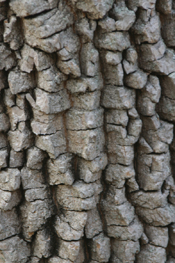
Tree Bark

Individual trees and shrubs have value and contribute to savings, but it is the collective influence of a well-maintained landscape that makes a real economic impact and has the greatest effect on property value. Direct economic benefits come from a savings in energy costs. Cooling costs are reduced in a tree-shaded home, and heating costs lowered when a tree serves as a windbreak. According to the USDA Forest Service, “Trees properly placed around buildings can reduce air conditioning needs by 30% and save 20-50 percent in energy used for heating.”

Property values of homes with well-maintained landscapes are up to 20% higher than others. Here are some eye-opening facts and statistics regarding the effect of healthy trees and shrubs:

  • Homes with “excellent” landscaping can expect a sale price 6-7% higher than equivalent houses with “good” landscaping. Improving “average” to “good” landscaping can result in a 4-5% increase.– Clemson University
  • Landscaping can bring a recovery value of 100-200% at selling time. (Kitchen remodeling brings 75-125%, bathroom remodeling 20-120%)– Money Magazine
  • A mature tree can have an appraised value between $1000 and $10,000.– Council of Tree and Landscape Appraisers
  • 99% of real estate appraisers concurred that landscaping enhances the sales appeal of real estate.– Trendnomics, National Gardening Association
  • 98% of realtors believe that mature trees have a “strong or moderate impact” on the salability of homes listed for over $250,000 (83% believe the same for homes listed under $150,000).– American Forests, Arbor National Mortgage

Original post here https://ift.tt/2I7BHjx.


from AAA Tree Lopping Ipswich https://ift.tt/34B9jO3
via IFTTT

Thursday, July 2, 2020

Leaf Spot Diseases: What You Need To Know

Written by Jackie Rhoades and published on https://www.gardeningknowhow.com/.

We talk a lot about how to spot tree risk in the form of tree location or position, but when it comes to spotting tree diseases, you need to take a closer look. Leaf spot diseases are one of the least talked about tree diseases, but they are just as important to look out for as EAB or Dutch Elm.

Plants With Spotted Leaves: Fungal Leaf Spot Treatments

From indoor and outdoor gardeners alike, one of the most common gardening questions is, “Why do my plants have spotted and brown leaves?”. And while there are many reasons for plain old brown spots, when those spots look like little brown bull’s-eyes, the answer my friends is fairly simple, organism-wise that is. Those plant leaf spots are caused by one of nature’s most basic organisms: a fungus.

Plants with Spotted Leaves

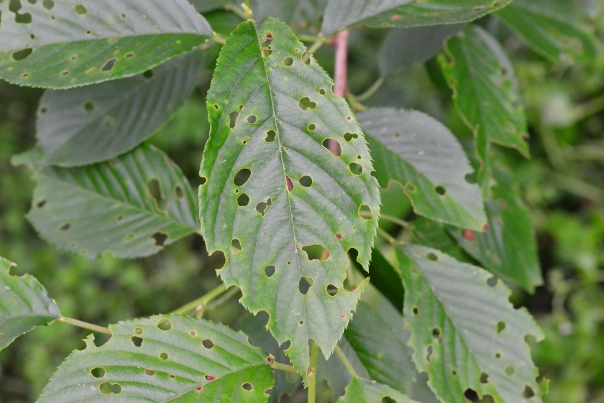
Fungal leaf spot can be found in your outdoor garden as well as on your houseplant. Spotted leaves occur when fungal spores in the air find a warm, wet, plant surface to cling to. As soon as that microscopic spore gets comfortable in its new home, sporulation (the fungal method of reproduction) occurs and the tiny brown fungal leaf spot begins to grow. Soon the circle grows large enough to touch another circle and now the fungal leaf spot looks more like a blotch. Eventually the leaf turns brown and falls to the soil where the spores sit and wait for the next available warm, wet, plant surface so the fungal leaf spot process can begin again.

Preventing Plant Leaf Spots

There are a few easy steps you can take to prevent the problem in your garden or on your houseplant. Spotted leaves or the causal fungus need two things to flourish: moisture and poor air circulation. For your houseplant, spotted leaves can be prevented by watering the soil and not the foliage. Leave enough space between your pots for good air circulation.

How to Treat Leaf Spot Fungus

No matter how diligent you are, the day will come when those tiny brown circles appear on the leaves of your plant so it’s important to know how to treat leaf spot fungus. As soon as you see plant leaf spots, treatment begins.

For houseplants, isolate the pot immediately to prevent the fungus from spreading. Remove any leaf that has been affected. Stop misting.

In the garden, the plant’s leaf spot treatment depends on preference.

For organic treatment, there are several safe and convenient treatments available. Most contain sulfur or copper octanate. Or you can try a more traditional treatment by spraying with a mild solution of bicarbonate of soda (baking soda), using ½ teaspoon per gallon (2.5 mL. per 4 L.) of water.

For those gardeners who have no objection, many all-purpose fungicides are available. Please read the label carefully before applying.

Original post here https://ift.tt/3gpVlDj.


from AAA Tree Lopping Ipswich https://ift.tt/2YTKsDH
via IFTTT

The Benefits of Stump Grinding

Written by Florence, Boone and published on https://nearsay.com/.

Choosing to remove the stump of a removed tree can benefit the property in multiple ways besides the lack of them being aesthetically pleasing.  Stumps left to decay for decades on a landscaped property can promote the establishment of termites and other pests including harmful fungus’s.  Stumps from elm trees, maples, willow, and other vigorous species typically sprout suckers and waterspouts which can grow six feet plus a year requiring constant removal, waterspouts may also pop up from other locations on the root network such as in the middle of your lawn.   Choosing to have a stump ground out is a non invasive to surrounding plants and structures which solves these problems without over compacting soil and ripping up unnecessary surrounding areas.

5 Benefits of Stump Grinding

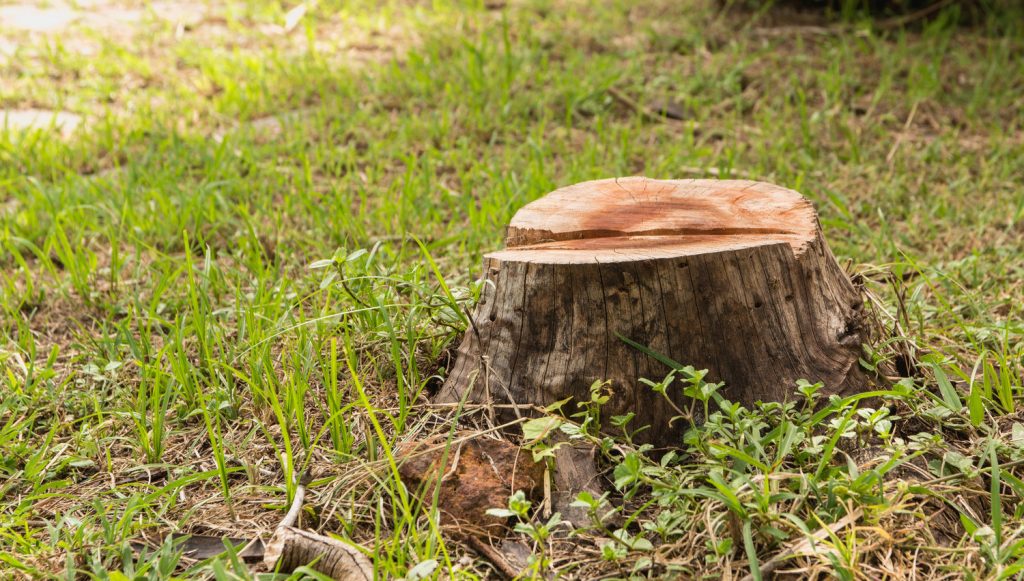
Stump on green grass in the garden. Old tree stump in the summer park.

When you have a tree cut down, chances are the stump will be left behind. Even if it’s small, you may have thought about having it removed. Here are some benefits of calling a tree services expert to grind it up.

Why You Should Get Tree Stump Removal

1. Gain Curb Appeal

Stumps are unsightly, and the eye is often immediately drawn to them. As remnants of a tree minus the lush vegetation that made them nice to look at, stumps don’t add anything visually to your property. Having them ground up gives your lawn more curb appeal.

2. Keep Your Lawn Healthier 

tree services florence

When left around, a stump may begin to rot. Any fungus or mold growing on it can transfer to the lawn, or nearby trees, bushes, and flowers. By removing it, you instantly boost the health of all plant life in the immediate vicinity. 

3. Free Up Space

Stumps are bulky, and they often take up a decent chunk of space. This is space that could be used to plant new trees, plant gardens, set up hardscapes, build gazebos, or invest in many other improvements. Have a tree services expert remove the stump, so you have room for something better.

4. Deter Pests

A stump on your property is bound to attract termites, beetles, and other wood-boring insects. If you want to stop these critters from crawling around on your property, remove the stump that’s attracting them. 

5. Remove a Trip Hazard

Because of their low profile and far-reaching roots, stumps can be a tripping risk. They’re especially dangerous for children, the elderly, or anyone with mobility issues. By getting a tree services expert to remove yours, you make your yard safer and avoid potential liability.

Original post here https://ift.tt/2NR2foB.


from AAA Tree Lopping Ipswich https://ift.tt/2VEjnm5
via IFTTT