Monday, August 8, 2022

Spotted Lanternfly FAQs – How To Get Rid of Them

The spotted Lanternfly (SLF) is an invasive insect that was first seen in the United States in Berks County, Pennsylvania in 2014. Since then, it has spread to 13 counties in Pennsylvania and has been found in Virginia and New Jersey. This destructive pest feeds on more than 70 types of plants, including trees, and can quickly kill a tree if left unchecked. While there is no known method of preventing SLF from spreading, there are steps that can be taken to control its population and protect your trees. If you live in an area where SLF has been found, you should inspect your trees regularly for signs of infestation, such as egg masses or adult insects. If you find any evidence of an infestation, you should contact your local extension office or the Pennsylvania Department of Agriculture for assistance. By taking these steps, you can help to protect your trees from the devastating effects of this invasive pest.

Will it Kill My Tree? – Spotted Lanternfly FAQs

Our office has been getting lots of questions lately about the Spotted Lanternfly. Many clients want to know “Will the Spotted Lanternfly kill my tree?”

The short answer is “not immediately.” The real answer involves knowing a bit more about their life cycle and how they behave. Read up on some Frequently Asked Questions about the Spotted Lanternfly.

What is the Spotted Lanternfly?

The Spotted Lanternfly is a bug that feeds on specific trees. It’s a type of bug known as a “plant hopper” – in other words, it can fly, and moves from plant to plant. It feeds on plants by using its “piercing-sucking mouth-parts” (similar to a mosquito) to pull fluid underneath the bark of trees. The pest’s mobility makes the control of Spotted Lanternfly a huge challenge for Tree Care and Arborist services.

Where did Spotted Lanternfly come from?

Spotted Lanternfly is a native of Southeast Asia. It is a native of China, Taiwan, and Vietnam. Many experts believe it traveled here in a shipment coming from one of these countries through international commerce. It was first detected in Berks County in 2014.

Can you stop the Spotted Lanternfly?

Again, the answer is “no.” The best we can do is to slow the spread of this pest and protect your landscape. There are few natural predators for this pest here in North America. However, a study from Cornell University found that two fungi (B. major and B. bassiana) in North America seem to provide control for adults. I emailed back and forth with one of the study authors, and it is unclear at this time if the native fungi will also help control nymphs. Researchers are actively trying to determine if the bacteria only control adult populations, or if these fungi can be used to control nymphs as well. B. bassiana is commercially available in products for nursery managers, while B. major is “poorly known” at this time.

At this point in the year, you will see the “1st instar,” or first stage of development. They’re called “nymphs” at this point in their life cycle.  They’ll continue to look like this (black with white polka-dots) until they reach the 4th instar. The 4th instar is the last stage of their development before they become full-grown adults.
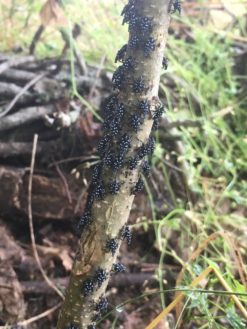
Spotted Lanternfly nymphRight now, you might see them anywhere. Adults lay their eggs on just about anything. We’ve had clients reporting nymphs on decks, potted plants, and patios. You will see these nymphs feeding near where the leaves emerge from branches, or on very young trees. This is because their piercing-sucking mouth parts aren’t well developed yet, and the bark is thinner on young plants and at the end of branches.

How Do I Get Rid of Spotted Lanternfly?

There are several things you can do to try and manage this pest on your property. Some involve treatments, while others are cultural practices.

Sticky Bands

Right now, you can use what are called “sticky bands” to help control the nymph population. Basically, this involves applying something similar to a giant “glue trap” to your tree. The idea is that the nymphs crawl onto the trap, get stuck, and never further their development. You can buy these products online.

These products are falling out of favor, however. They’re so sticky they’re catching “non-target” organisms, like birds and squirrels in some cases. A decent workaround for this is to simply use some cheap duct tape and DIY your own.
ailanthus altissima spotted lanternflyTree Identification

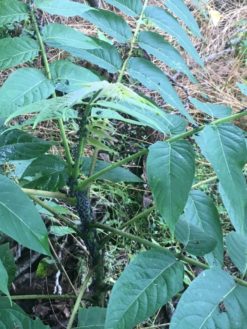
Knowing which trees you have on your property is critical as well. The Spotted Lanternfly is able to complete its life cycle on a wide host of plants. It seems to prefer Ailanthus altissima or “Tree of Heaven” for feeding and reproduction. Identifying this tree, and removing it from your property, is an important part of management. Simply cutting it down will seldom remove the problem. You should consider consulting with a professional who can help you remove this invasive plant for good.

Spotted Lanternfly feeds on other plants, too. It will feed on anything with high sugar content in the sap. In our area, this means any time of fruit or ornamental fruit plants. This includes grape vines (cultivated or wild), maple trees, pear, apple, cherry, and plum trees (fruit-bearing or ornamental), and birch trees. Knowing if you have these plants on or near your property so you can look for the Lanternfly is an important part of management. Google images of leaves and bark if you’re not sure what these trees look like so you can educate yourself!

Treatments

Now that you know about cultural management practices (removing Ailanthus trees and sticky bands), you should consider treatment options. At this time, I recommend treating only the plants in your landscape that are A) most at risk, and B) part of your outdoor living.

We thought long and hard about our treatment options. We even consulted with some university researchers about the program before offering it to the public. Our program is designed to give you the best, season-long control possible in the most environmentally responsible way possible.

Before contracting with a professional to treat your trees, ask lots of questions. Do they understand the pest’s life cycle? How many treatments are they doing? Why are they doing those treatments? Have they consulted all the available information before formulating their plan?

Will Spotted Lanternfly Kill My Tree?

Back to the original question – “Will the Spotted Lanternfly kill my tree?” The answer is “probably not directly.”Damage caused by piercing-sucking mouth parts opens the bark. There’s an open wound on the tree. This leaves the tree susceptible to other bugs and diseases.

Think of it like this – a chest cold doesn’t necessarily kill you. If you leave it untreated, however, it can develop into pneumonia, and the congestion building up in your lungs is what kills you. Leaving your landscape trees untreated is like that – a chest cold. It’s not going to kill them immediately, but over time, it’ll only get worse and lead to plant death.
spotted lanternfly honeydew drippingWhat a mess!

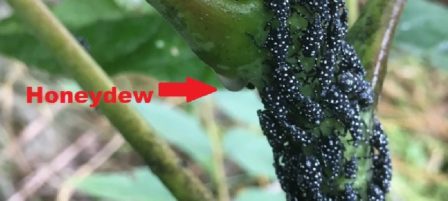
The larger concern is that it will be a mess. As it feeds, Spotted Lanternfly secretes (translation: basically poops) a sticky substance called “honeydew.” The Lanternfly feeds in such high numbers, researchers often have to wear raincoats to keep dry. It’s even been described as being “rained on.” This picture on left is of nymphs, but the adults will be much worse.

This honeydew is also the perfect breeding ground for a fungus called “black sooty mold.” You can see some of it in this picture already forming. This is basically going to make outdoor spaces underneath these trees unusable. This will be especially true in public areas without treatment, like parks.


Source link


from AAA Tree Lopping Ipswich https://ift.tt/Yo40rH2
via IFTTT

Friday, August 5, 2022

Ways to Deal with Exposed Tree Roots

Trees are an essential part of the landscape, providing shade, beauty, and habitats for wildlife. However, trees can also pose a danger to your property. Exposed tree roots can damage sidewalks, driveways, and foundations. They can also create trip hazards for pedestrians. If you have exposed tree roots on your property, there are a few things you can do to mitigate the damage. First, you can cover the roots with mulch or soil. This will help to prevent further erosion and protect the roots from damage. You can also use root barriers to redirect the roots away from vulnerable areas. Finally, you should regularly check the roots for signs of damage and address any problems promptly. By taking these steps, you can help to protect your property from the damaging effects of exposed tree roots.

How to Handle Exposed Tree Roots

A tree’s root system is a complex structure made up of long, winding roots that intertwine and fuse together to provide tremendous strength against natural forces. Since the majority – or entirety – of a tree’s roots exist beneath the ground, it’s not a sight many homeowners get to see. Sometimes, one or a few of a tree’s roots can become visible above the ground. Let’s take a look at what it means when exposed tree roots begin to occur and how to deal with them to keep your tree healthy and your yard safe.

The Primary Cause of Exposed Roots

Despite the fact that it might like your tree’s roots are growing in an upward direction, the root system of a tree actually grows outwards and downwards from the base. One of the most common causes of roots becoming visible above ground is erosion. When the ground above a tree’s root system is exposed to runoff, rain, wind, and even lack of sunshine for an extended period of time, soil erosion can occur naturally, leaving roots underneath exposed.

What To Do With Exposed Tree Roots

When a tree’s roots are exposed, they can easily become damaged by lawn tools or foot traffic. Damaged roots can’t efficiently collect nutrients and water for the tree as they’re supposed to, which can negatively affect your tree’s health. When you find yourself with exposed tree roots in your yard, there are a few things you can do to prevent damage and keep your tree healthy:

  • Discourage foot traffic in the area.
  • Spread mulch over exposed roots to cushion and insulate them.
  • Opt for organic materials like pine straw, pine bark nuggets, or shredded wood for mulching
  • If you notice signs of soil erosion, cover the entire area with mulch to prevent other roots from being exposed.
  • Avoid mowing too close to the exposed roots.
  • Want an alternative to mulching around the exposed roots? You can instead plant ground cover by spreading new soil and adding plants like Periwinkle, Ajuga, Wild Violets, Asiatic jasmine, or Monkey Grass to the area around your tree.


Source link


from AAA Tree Lopping Ipswich https://ift.tt/NzaWX5D
via IFTTT

Diseases Affecting Palm Trees

Palm trees are an iconic symbol of the tropics, gracing many a postcard and lending an air of exoticism to any landscape. However, these stately plants are not immune to disease and can be affected by several different types of Palm Tree Disease. One of the most common is Red palm weevil, which is caused by a beetle that burrows into the trunk of the tree, causing it to collapse. Another serious threat is Fusarium wilt, which is caused by a fungus that attacks the tree’s vascular system, leading to wilting and death. Palm trees can also be affected by environmental stresses such as drought or cold weather, which can cause damage to the leaves or even kill the tree. With proper care and attention, however, palm trees can withstand these diseases and continue to bring beauty to any setting.

4 Diseases That Can Affect Palm Trees

Did you know that palms are not actually trees in the traditional sense? They are not closely related to maples, oaks, pines, and other common trees. Actually, they’re more closely related to grasses. As such, palm trees are prone to different diseases than other trees. Here are four such diseases to watch out for in your palms.

1. Fusarium Wilt

Fusarium wilt is a fungal disease caused by the species Fusarium oxysporum. It only affects palm trees. There are several strains of the disease-specific to different species of palm trees. The key symptom of fusarium wilt is discolored, brown, crinkling fronds. The symptoms usually begin near the bottom of the fronds and work their way upward.

There is no cure for fusarium wilt, but by providing the tree with proper care, you can extend its life. Have a tree care company remove the diseased fronds and dispose of them carefully to avoid spreading the disease to other palms.

Water and fertilize the tree, and consider treating it with fungicides that contain thiophanate-methyl. The fungicide won’t cure the fusarium wilt, but it will treat or prevent other opportunistic infections, like pink rot, which can further weaken the plant.

2. Ganoderma Butt Rot

Another fungal disease, Ganoderma butt rot is caused by Ganoderma zonatum, which invades the roots and lower stem of palms. It can affect all species of palms, working its way into the woody tissue and preventing it from transporting water up the stem. The first symptom is general dieback and severe wilting of the fronds. Soon after, a conk, or mushroom-like structure, may emerge from the palm’s butt.

Since there is no cure for Ganoderma rot and it is easily passed to other palms through the soil, you should have all infected trees removed promptly. Make sure the stump and roots are removed, too. Ganoderma rots do affect other trees, but they are caused by a different species of Ganoderma than the one that infects palms – so Ganoderma butt rot in your palm will not be passed to other varieties of trees.

3. Bud Rot

Bud rot is a disease that affects smaller areca palms. Two species of fungi – Phytophthora palmivora and Thielaviopsis paradoxa can cause it. The fungi invade the heart of the palm and essentially prevent it from successfully forming new buds.

The first symptom of bud rot is a lack of new crown growth. You’ll notice that your tree does not form any new fronds, and if you look more closely, you’ll see that the new buds are brown, rotten, and curled.

There is no cure for bud rot once a tree is infected. Have infected trees removed, and spray your healthy trees with fungicides to prevent them from developing an infection. Bud rot thrives in soggy soil, so keep the soil around your palms well-drained to protect them.

4. Leaf Spot Diseases

Palms are also susceptible to a number of leaf spot diseases. Although these diseases are caused by a few different species of fungi, they all have similar symptoms and can be treated in similar ways. The primary symptom of a leaf spot disease is the appearance of fuzzy brown or black, mold-like spots or streaks on the underside of the fronds.

To treat the condition, have the most infected fronds pruned away. Have fungicides been applied to prevent the fungi from spreading to other leaves? Also, try fertilizing your palms; this can boost their vigor, allowing them to fight off leaf spot fungi more effectively. If you water your palms, do so in the morning so that they don’t remain wet overnight. Most palms recover with proper care.


Source link


from AAA Tree Lopping Ipswich https://ift.tt/0NyAui9
via IFTTT

Thursday, August 4, 2022

What To Expect In a Tree Inspection?

Written by Admin and published on https://friendlytree.com/.

A tree inspection is a periodic checkup performed by a qualified arborist to assess the health and safety of a tree. The inspection involves examining the tree from top to bottom, looking for signs of disease or damage that could make the tree unsafe. Once the inspection is complete, the arborist will provide a report detailing their findings and recommendations. Depending on the severity of the issues, they may recommend anything from pruning and fertilization to complete removal. Regular tree inspections are essential for keeping trees healthy and safe, so be sure to schedule one whenever you notice any changes in your tree’s appearance or behavior.

Original post here https://ift.tt/g6MF0xU.


from AAA Tree Lopping Ipswich https://ift.tt/HPWnuli
via IFTTT

Importance of Replanting Trees

Written by Admin and published on https://www.panoramatreeservice.com/.

Trees provide numerous benefits to our environment. They help to purify the air, regulate temperature, and prevent soil erosion. They also provide homes for wildlife and create beautiful landscapes. Given all of these benefits, it’s no wonder that replanting trees is such an important undertaking. There are a few things to keep in mind when replanting trees, however. First, it’s important to choose the right tree for the right location. Consider the tree’s size, sun exposure, and water needs when making your selection. Second, be sure to plant your tree at the correct depth. The roots should be covered with soil, but the trunk should not be buried too deeply. Finally, water your tree regularly during its first growing season. These simple tips will help ensure that your newly planted tree thrives for years to come.

Replanting Trees: What You Should Know

There are many reasons why homeowners might need to move a tree. They may want to make room for a new addition or reposition a tree for better sunlight exposure. In other cases, the tree may have outgrown its location and need to be transferred to a spot with more room for it to grow. No matter the reason, tree replanting requires planning and expertise.

Learning how to replant a tree is not that simple because there are several factors to consider before deciding to uproot it. This is why a tree relocation service utilizes a systematic approach to ensure the tree’s survival after relocation.

This article provides a concise overview of all you need to know about tree replantation, including reasons why it’s necessary and how to do it effectively.

What Is Tree Transplanting?

Tree transplanting is simply the process of uprooting a tree from its original spot and moving it to a new one. Relocating a tree must be executed correctly using the proper steps of pruning, root preparation, and tree care. Trees are less likely to survive in their new home without this methodical approach.

Generally, relocating a small number of trees may not pose many difficulties, but a medium to large-scale tree relocation can be tricky. The key to successful tree transplantation is in making sure the roots are strong enough to withstand the transfer. Otherwise, the tree might die from root loss.

Reasons for Replanting Trees

There are various reasons why replanting trees is a good option. One of the most common ones is to save a perfectly healthy tree. Rather than removing it completely, it makes more sense to keep it due to the relaxing aesthetic it gives. Not to mention, it is better for the environment by providing clean air.

Other reasons concern preserving a home or landscape. When a tree has grown too large for the space in which it was originally placed, this can damage walls and concrete or even impede on electrical wiring. This can be incredibly dangerous and requires the help of tree relocation professionals.

The Best Time To Move Trees

One honest mistake some homeowners make when learning how to transplant a tree is trying to move it any time of the year. This can be detrimental to the tree’s overall health and survival. The best time to move a tree is during early spring, before any growth begins, or during the fall, after the leaves have already fallen. This applies to deciduous trees, which shed their leaves every year.

For evergreens, the best time to move them is during early spring or late summer. If the tree replantation is done in winter, it will be difficult to get the spade into the hardened ground. If the relocation is done in summer, it will be too hot and cause the leaves to wilt. Whatever happens, it’s important not to let the roots dry out before they get a chance to be transplanted.

Factors to Consider Before Relocation

Any tree that needs to be replanted must be carefully evaluated according to the following factors:

Health

If a tree is in poor form or has aged considerably, then it’s not a great candidate for relocation. It cannot easily re-establish its root system once transplanted.

Size

A small tree has more chances of surviving a relocation than a large one. It will be harder to move larger trees due to logistic considerations, too.

Root System

The size of the root ball is a very important thing to consider when moving trees. If a tree does not have one that’s large enough, it will not have enough roots to recover quickly.

Species

Some tree species are invasive and do not qualify for replanting. These trees have low conservation value.

Amount of Pruning

If the tree’s form may be impossible to recover after being transplanted, then a replantation may not be worth it. This refers to the amount of pruning necessary to ensure a successful relocation.

Survival Rate

A tree with an imbalanced form or that has cracks, splits, and cavities may be less likely to survive a tree explanation. In this case, it may not be cost-efficient to go through with the process.

Steps on How To Transplant a Tree

The proper way of replanting trees follows these steps to guarantee quick healing and healthy regrowth:

  1. Choose the transplant location.
  2. Prepare the planting hole.
  3. Dig out the tree.
  4. Wrap up the roots.
  5. Placed the tree into the hole.
  6. Fill up the hole with soil.
  7. Add mulch to the soil.
  8. Transplant the tree.
  9. Water after replanting.

Move Trees Safely With Expertise and Care

Replanting trees can be done safely with the right help. When considering a tree relocation, it’s important to understand why you’re doing it, along with all the factors involved to make sure the tree stays healthy after transplanting it.

Original post here https://ift.tt/CMWRnTz,


from AAA Tree Lopping Ipswich https://ift.tt/Grp6odA
via IFTTT

Tuesday, August 2, 2022

How Do You Prepare For Tree Removal?

Written by Letty Thalia and published on https://roohome.com/.

If you have a tree that needs to be removed from your property, you may be wondering what to expect from a tree removal service. The first thing you should know is that tree removal is a complex and dangerous task that should only be attempted by experienced professionals. While it may be tempting to try to remove a tree yourself, it is important to understand that this can be a hazardous undertaking. In addition, many tree removal companies will not remove a tree unless it has been inspected by a certified arborist.

What to Expect and How to Prepare for a Tree Removal Service

How do you prepare for tree removal?

Over three trillion trees exist on the earth at any given time. As of this writing, there are around 400 trees for every person on the earth. Trees are awe-inspiring specimens of nature. The only solution if yours is getting out of hand is to have the tree cut down and hauled away.

Trees are cut down in a variety of ways. What’s the procedure? What’s left? Is there anything else you need to do before it’s removed?

Expectations

There is a slew of variables that will affect the quality of a tree removal job.

The manner in which your tree is removed will be influenced by its size. In addition, where you place your tree will be an issue. In order to get rid of a tree that is close to a house or electricity lines, you’ll have to cut it down.

However, in general, tree removal procedures will be very similar.

What’s the Price?

Depending on the size and difficulty of the tree to remove, the cost of removing it will be different.

You can expect to pay anywhere from a few hundred dollars to more than $1,000 to remove an enormous tree that needs special attention. If you want the stump removed or ground down so that it doesn’t stick out, you’ll have to pay extra.

Your tree removal service should always be consulted to acquire an estimate of the costs in your individual situation.

What’s the Plan?

When it comes to removing trees, there are two primary approaches.

The tree can be cut down in one piece if there is adequate room. Trunks are sliced in the direction that they should fall from a cutting point. Cut up the tree into smaller pieces when it has fallen to the ground.

This procedure isn’t viable or safe if the tree is near structures or electricity lines. Individual branches from the top of the tree would be removed in these circumstances. In order to prevent them from falling into electrical lines or onto buildings, these items will be rope-secured if necessary.

In the end, What’s Left?

Conventional tree removal involves cutting the tree down to a small stump.

There are two options for the branches: they can either be used as firewood or they can be removed. In the event that you wish to get rid of the stump completely, you can either have it removed or ground down to the point where it is no longer noticeable.

Stump removal is more labor intensive than simply leaving the stump in place, so expect to pay more for it.

What to Do Ahead of Time?

To remove a tree, there are a few things you’ll need to take care of first.

These aren’t burdensome, but they will make the job of your tree removal company a lot easier. Your tree can be removed promptly and safely with no fuss if you prepare your yard ahead of time.

Vehicle Parking Spaces Must Be Created.

Tree removal typically necessitates the use of a large amount of machinery.

As a result, ensure that your tree removal company has ample room to park its trucks. In addition to a wood chipper and a large truck, there will likely be a lot of debris. As close as possible, the more convenient it is for them.

Instead of hoping for the best, it might be worth your while to make a few parking reservations in advance.

The Tree Is Easily Accessible.

Workers must go back and forth between their cars and the tree.

So make sure there is a clear path for them to return and forth from their destination. When moving wood or equipment, the last thing you want them to do is to squeeze past the automobiles parked in the driveway.

It’s much easier if you have another way to get into your yard. It’s possible you’ll have to let your neighbors know what’s going on as well.

Discard Anything Fragile from the Area

The tree has probably had a significant number of its limbs lopped off.

Consider moving any breakable items, such as plant pots or a piece of furniture, away from the tree. There is a possibility of additional charges if your tree removal service is required to relocate objects themselves.

Also, keep your yard free of any animals for the duration of the project, since they could pose a major risk to both the employees and themselves.

Convene about Your Needs

Having a meeting with your tree removal firm before the work begins will ensure that they can evaluate the site and have a clear understanding of your needs.

If you want the stump removed, you’ll need to come to an agreement on that ahead of time. As soon as the work is finished, it may not be possible to have it done at the same time. In addition, it may end up costing you more money than if you had consented to it before the work began.

Make sure everyone is on the same page about the work that will be done by taking the time to go over all of your options.

Are You Interested in Hiring a Tree Removal Company?

When it comes to tree removal, there’s no better place to turn than here.

From tree pruning and trimming to tree transplantation and removal, we provide a comprehensive range of tree services. We’ve been in business for more than two decades, and we only work with tree trimmers that are fully insured and bonded. As a result, you can relax knowing that both you and your belongings are in capable hands.


Original post- https://ift.tt/9tEvwVW.


from AAA Tree Lopping Ipswich https://ift.tt/JYy60PA
via IFTTT

Why Is Tree Removal Necessary?

Written by Arbor Day Foundation and published on https://arbordayblog.org/.

Tree removal is often necessary when a tree becomes too large for its location, poses a safety hazard, or is no longer healthy. In some cases, it may be possible to trim back a tree in order to mitigate the problem. However, there are also times when complete removal is the only option. For example, if a tree is leaning dangerously and/or has broken branches, it may need to be removed in order to prevent it from causing property damage or injuring people. Similarly, a tree that is considered “dead” or “hazardous” is also typically removed. Dead trees are often at risk of falling and can pose a serious safety hazard, while hazardous trees may have internal issues that make them dangerous to people and/or animals. Ultimately, tree removal is often necessary in order to maintain public safety.

Saying Goodbye: When it’s Time to Remove Your Tree

Why is tree removal necessary?

Trees bring so much benefit and beauty to the landscape, it can be hard to part with them. But, while a tree may seem healthy to the untrained eye, it could be a disaster waiting to happen.

Tree removal is usually a last resort, when no other safe management option, like pruning or disease mitigation, is sufficient. Dead, dying or otherwise hazardous trees can lead to thousands of dollars in damage, plus the priceless cost of personal injury. Often a tree doesn’t look dangerous until after a storm or heavy snow exposes its vulnerabilities.

As a tree owner, you are responsible for damage or injury that occurs because a tree that should have been removed was left standing. The good news is, you can often tell if a tree is struggling by studying its branches, trunk, roots, and location.

Here are some red flags to look for which indicate your tree should be inspected by a professional and possibly be removed.

It’s Time to Call an Arborist if…

There are signs of infection. Crown dieback, cracks (deep splits in the tree’s bark), misshapen or discolored leaves, soft crumbly wood, and the appearance of fungi may indicate your tree is infected. Other signs that may show the tree has unwanted pests include emergence holes, feeding galleries, and woodpeckers feeding heavily on the tree.

You see large, dead branches in the tree’s crown. These are sometimes referred to as widow-makers because they can fall for seemingly no reason and seriously injure those below. If 50 percent or more of the tree is dead or damaged, it should probably be removed for safety reasons.

Your tree isn’t growing well. Take a look at the health and vigor of your tree compared to the trees growing near it. Thin leaf cover, discolored foliage, and stunted growth are all signs your tree is having trouble. The reason may need to be diagnosed by a professional.

There is evidence of root defects. Root defects often are not easily noticeable, but heaving soil and fungi growing near the tree’s base are both signs of root issues.

The trunk is compromised. Cracks or splits, large wounds, and dead branch stubs on the tree’s trunk all indicate internal decay. Many people don’t realize trees can actually live for years with internal decay. Some trees can handle internal decay and remain standing for a while, but it’s just a matter of time before they eventually do fall. Trees with multiple trunks (also called “leaders”) can also end up with structural issues later on down the road.

The tree is hollow. A tree with a hollow trunk has been seriously compromised and is a hazard. If a third of the tree is rotted or hollow inside, it needs to be removed.

The tree is suddenly leaning. All leaning trees aren’t necessarily dangerous, but a tree that suddenly leans to one side may have structural problems.

You observe sprouts at the base of the tree. These are known as epicormic shoots and they indicate that the tree is severely stressed and should be evaluated by a professional.

The tree is under power lines. A tree that is growing into power lines can become a hazard and may need to be removed by a certified arborist or tree service.

The tree is too close to a house or other structure. Trees hanging over the roof or too close to a structure might need to be removed – or at least regularly pruned. In general, large trees should be at least 20 feet away from a house or building.

Dead or dying trees don’t always need to be removed, if they are located in a forested area or away from people and structures. These trees can serve as a home and refuge for woodpeckers and other wildlife.

While some tree failures are sudden and unpredictable, it’s good to know most can be prevented by proactive measures. Now is a good time to inspect trees, before the worst of summer’s storms and heavy winter snowfall. If you notice any of the above signs, contact a professional, as most tree removal jobs are unsafe for the average home or property owner.

Original post-https://ift.tt/tq7w2I5.


from AAA Tree Lopping Ipswich https://ift.tt/YXxWySl
via IFTTT