Wednesday, August 17, 2022

What is the Best Mulch to Prevent Weeds?

If you’re like most gardeners, you’ve probably tried just about every method imaginable to stop weeds from taking over your flower beds. But no matter how much time you spend pulling weeds by hand or spraying them with herbicide, they always seem to come back. One of the best ways to prevent weeds is to apply a thick layer of mulch to your flower beds. Mulch acts as a barrier, blocking sunlight and preventing weed seeds from germinating. There are many different types of mulch available, but caution should be used when selecting one for your flower bed. Some types of mulch, such as wood chips or pine needles, can actually provide a suitable environment for weed seeds to sprout. Instead, opt for a coarse type of mulch, such as gravel or crushed stone. These types of mulch provide excellent weed control without the risk of promoting new growth. By applying a thick layer of the right type of mulch, you can finally put an end to those pesky weeds once and for all.

What is the Best Mulch to Stop Weeds?

Maintaining a garden is a labor of love. But sometimes the time and effort involved can be challenging to keep up. That’s why many homeowners today look for ways to make gardening easier. Low maintenance solutions like automatic sprinklers and composting systems are just the beginning.

One of the most challenging tasks for maintaining a garden involves weed removal. Weeds can be difficult to find and remove. Even when you least expect it, there could be seeds from weeds spreading around your garden beds. These seeds could be laying dormant until conditions are right for them to start thriving in your backyard.

Weeds are often the cause of many frustrations and issues in the garden. To help you manage weeds and keep them under control, let’s explore one of the most effective methods for stopping them—adding mulch to your garden beds.

Why mulch is a great option for weed control

When you apply mulch to your garden beds you are giving your soil a protective layer. A layer of mulch effectively blocks out the sunlight and prevents it from hitting your garden’s soil. Keep this in mind as we go through how weeds end up in your garden.

Weeds tend to spread when their seeds drop and get deposited into the soil. They can quickly multiply and spread throughout your garden in no time when growing conditions are favorable for them. Luckily, one of the most essential ingredients that help the seeds of a weed grow is nourishment from the sun.

So if you effectively block out sunlight hitting your soil, you take away a major food source for the seeds of the weeds to grow. Photosynthesis can longer occur which helps give weeds the nourishment they need to grow.

How mulch can help other plants thrive

One of the major benefits of laying down mulch is the protection it provides for the rest of the plants in your garden beds. During hot and dry seasons, mulch can help retain moisture in your soil. So long after your garden beds have been watered, the mulch will retain water and keep the soil moist.

This moist environment underneath your mulch will continue to help your plants thrive in more ways than one. Mulch can also help regulate temperature. In colder climates, the mulch is also effective at retaining heat. This form of temperature control contributes to a warm environment that helps your plants thrive well before Spring kicks in.

By now you’re probably wondering why mulch doesn’t hamper the growth of your other plants if that’s what it does to weeds. The truth is, you have to have well-established plant seedlings in place before laying down mulch. This ensures your seedlings sit above the mulch so they can still absorb nutrients and energy from the sun via photosynthesis.

Mulching on a budget

Your gardening budget can definitely help you narrow down your options for garden mulch. If you don’t want to fork out money for it, there are several free options you can rely on. If you regularly prune your garden you may already have a collection of twigs and small branches lying around. These can be perfect options for your garden mulch.

Fallen leaves from the trees in your yard are also a great option. But depending on the type of leaves you choose they may compost a lot faster than your standard mulch. Other free options to consider are sawdust or wood chips leftover from any work you’ve done in the garage. If you own a big lawn at home you may also appreciate that grass clippings from lawn mowing can also be used for mulch.

Choosing the best mulch for your needs

Choosing the best mulch to stop weeds in your garden really depends on your maintenance needs and what you’re trying to grow in your individual garden beds. Ideally, you want a mulch that can block out light from your soil. That’s the most important thing to consider when choosing the best mulch to stop weeds.

The free options we mentioned earlier like leaves and grass clippings are great but they can decompose a lot faster than other varieties. Wooden chips and mulch are popular options for several reasons. They don’t decompose quickly. They can last for months or well over a year before they start to deteriorate. One of the disadvantages of wooden mulch and chips is that because they don’t break down as fast, they won’t enrich your soil and provide your plants with nutrients.

A great solution we’ve found is using a combination of compatible mulch like leaves, grass, and hay with wooden mulch laid on top of it. This option gives you the best of both mulches. You’ll get the nutrients from the breakdown of leaves and other organic matter combined with the long-lasting surface protection of wooden mulch.

Get your next batch of garden mulch from Daryl’s tree care

Do you have a few trees that need to be removed from your garden? If so, we’ve got some great news for you. These trees can be turned into mulch that you can use directly in your garden. As part of our tree removal service, we offer mulching. So the branches, tree stump and log from your tree can be placed straight into our wood chipper where it’s turned into wooden mulch.

Even if you’re not getting any tree removed, we can still supply and deliver tree mulch straight to your yard. But you will have to be patient. Our wooden mulch only becomes available for jobs that require trees to be processed through a wood chipper.


Source link


from AAA Tree Lopping Ipswich https://ift.tt/DwVR9jP
via IFTTT

The Benefits of Deep Root Fertilization

Deep root fertilization is a process by which nutrients are delivered directly to the roots of a plant. This can be done through either soil injection or foliar feeding. Fertilizers typically used in deep root fertilization include nitrogen, phosphorus, and potassium. Soil injection is considered the more effective method of delivery, as it minimizes the risk of foliar burn and ensures that the nutrients are delivered directly to the roots. In addition, soil injection does not require the use of special equipment, making it more accessible for the average gardener. Deep root fertilization is an important part of plant care, as it helps to ensure that plants receive the nutrients they need to grow and thrive. By delivering nutrients directly to the roots, deep root fertilization helps to promote healthy growth and prevent nutrient deficiencies.

Deep Root Fertilization

Deep root fertilization is the preferred and most effective method for fertilizing trees and shrubs. Through this process, liquid, time-release fertilizer is pressure-injected in a grid pattern into the root zone of the tree or shrub. Well-nourished trees and shrubs have better resistance to disease, insect attack, and drought.

Deep root fertilizing can help keep your trees and shrubs healthy and promote luxurious foliage that adds beauty and value to your property. Liquid fertilizer is injected directly into the root zone area for maximum benefits. Its slow-release action won’t burn delicate feeding roots. Deep root fertilization can also help with problems of soil compaction. Liquid fertilizer injected into the root zone under pressure helps aerate the soil. It opens up air pockets, helping to provide much-needed oxygen to the root system. At Urban Forest Pro, we use a fertilizer with a 6-month time release.

Portland OR Deep Root FertilizationThis method of fertilization is especially useful for trees and shrubs growing in lawns or having other vegetation such as ivy or other ground covers around them. The fertilizer is injected below the roots of the surface vegetation to provide maximum benefit to the slightly deeper roots of the trees and shrubs. Surface fertilization, such as typical lawn fertilization, usually does not provide a significant benefit to trees and shrubs. When fertilizer is applied to the surface, the thick, fibrous roots of lawns and ground covers utilize and hold the nutrients and do not allow them to infiltrate to the deeper sub-surface soil layer where the roots of the trees and shrubs reside. Micronutrients, such as iron and manganese, systemic insecticides, and Mycorrhizae can also be added to fertilizer to help treat other common tree and shrub problems.

Frequently Asked Questions About Tree Health

My tree looks sick what can I do? Just like people, trees have the best chance of fighting off disease or recovering from an injury, if they have proper nutrition. The first step, which is something you can do yourself, is to fertilize the tree. The next step is to call an arborist for a consultation. You can call a consulting arborist who does not do the tree work to get an independent opinion about what is going on with the tree for a small fee or call a tree service for a free estimate where you will get recommendations on what should be done and prices for that.

If branches on your tree are dying back you need to act quickly to save your tree. Trees die from the tips of the branches back so dying branches are a serious symptom of something is wrong (except when that is typical of the species). To check if a branch is dead when there are no leaves on the tree, look for leaves that dried up but did not fall off the tree and try breaking one of the twigs if it snaps, like the wood is dry, it is a dead branch.

There is construction going on near my trees should I be concerned? Absolutely, if someone is doing construction near your tree talk to the foreman to see what precautions are being taken to protect your tree. The general rule of thumb is that a tree needs a protected barrier of 1′ in a radius around the tree for every inch in diameter of the tree at breast height. If you are not satisfied insist that a consulting arborist is called to ensure that the trees are not endangered. A tree can be twice as big underground as they are above so precautions need to be taken.

Source link


from AAA Tree Lopping Ipswich https://ift.tt/cDxBEXU
via IFTTT

Friday, August 12, 2022

DIY Tree Care Danger and Risky

Many people take pride in caring for their own yards and gardens, but sometimes DIY tree care can go wrong. One horror story is about a man who decided to trim his own trees. He got up on a ladder with a chainsaw and started cutting away. Unfortunately, he cut into the wrong spot and the tree came crashing down, narrowly missing him. Another story is about a woman who decided to fertilize her own trees. She mixed up a batch of fertilizer and poured it around the base of the tree. However, she used too much and the tree’s leaves started burning. She had to call a professional to come and rescue the tree. These stories show that it’s important to be careful when you’re doing your own tree care. Sometimes it’s best to leave it to the professionals.

DIY Tree Care Horror Stories

Ghouls and goblins aren’t the only things you should be afraid of this Halloween. If you’re thinking of trimming or removing a tree over the next few weeks, you should know that an average of 80 people die in the U.S. each year due to tree care accidents, with countless more incurring serious injuries. In this post, we want to focus on some of the most common mistakes homeowners make when maintaining their trees. It’s our hope that you will realize the advantages of hiring an experienced tree service instead!

Power line dangers

Storm-damaged trees and nearby power lines are a recipe for disaster. Yet we often hear stories about homeowners who get too close to a downed line and end up dying from electrocution. As a reminder, you should never touch a power line or any tree touching a power line for that matter.

So what should you do if a heavy storm or powerful gust of wind knocks down a nearby power line or tree? Play it safe and call a city electrical official or your local tree service. These professionals will understand the safety measures that need to be taken before fixing the electrical problem.

Risky heights

Think you’re properly equipped to handle any scope of tree care because you have “the best ladder in the world?” Trust us when we say that a ladder and power tools rarely make for a safe combination. It doesn’t matter if your ladder is several years old or brand-new — if you slip while stretching and straining, you’re likely going to find yourself in a world of hurt.

Watch a professional tree service work and you’ll see they use a bucket lift instead of a ladder. Not only does a bucket lift allow them to access the tallest branches of the tree, but it also ensures their safety from start to finish. So avoid the possibility of a nasty fall and hire a reputable tree care company instead.

Chainsaw injuries  

Using a chainsaw to cut down a tree requires the utmost precision. But that doesn’t stop inexperienced operators from taking matters into their own hands. Consider the fact that more than 30,000 people are injured in chainsaw accidents every year. A sizable chunk of them occurs because of incorrectly cutting into a piece of wood, allowing the tip of the bar to be pinched, causing what’s known as ‘kickback.’ Again, make the smart choice here and opt for professional tree removal over a potential disaster.

Falling trees

This might be the most obvious DIY tree care risk on this list. Sure, it makes sense that the angle of your cut will have a lot to do with where the tree will fall. However, without years of expertise, it’s almost impossible to factor in wind, slope, wood-rot, and nearby trees that can cause a tree to fall in a less-than-ideal direction. That’s why we suggest contacting an expert if you aren’t 100% confident in your tree felling ability.

TURN TO OUR TREE SERVICE

As you can see, there’s a lot that can go wrong when an overzealous homeowner decides to take on a tree trimming/removal project. But with the number of tree services in Chicago, how do you know which one is right for the job? This is where our team at Pro Tree Service enters the equation.

In 1989, we set out with the mission to provide unmatched tree care at an affordable price. Fast-forward 30 years and that mission remain the same. Simply come to us with any reasonable, written estimate and we will beat it by 10%. When you work with Pro Tree Service, you never have to worry about hidden fees or gimmicks.

Affordability isn’t the only thing that sets Pro Tree Service apart from the competition. As a fully licensed, insured, and bonded company, we are legally incorporated and carry workers’ compensation, commercial general liability, and all required municipal bonds and licenses.

We would be remiss if we failed to mention our 24-hour emergency response service. Why is this worth mentioning? Well, the reality is there’s never a convenient time for a tree care emergency. You can count on Pro Tree Service for quality work in a timely fashion.

Source link


from AAA Tree Lopping Ipswich https://ift.tt/FzQuNMl
via IFTTT

Black Walnut: The Killer Tree

The Black Walnut tree is a beautiful, hardy species that is popular in many gardens and parks. However, it is important to be aware of its toxicity. Every part of the tree, from the leaves to the nuts, contains a substance called juglone. Juglone is poisonous to many plants and animals and can cause serious illness if ingested. In fact, Black Walnut trees are often blamed for killing other plants that are growing nearby. If you have a Black Walnut tree on your property, it is important to take precautions to prevent your pets or other animals from coming into contact with it. You should also avoid planting other species of plants beneath the tree, as they are likely to succumb to its toxic effects. With a little bit of care, you can enjoy the beauty of the Black Walnut tree without putting your family or your garden at risk.

Black Walnut Tree Toxicity

Prevent the frustration and embarrassment of planting a beautiful garden, only to have it wilt and die within weeks. Knowing how black walnut trees are toxic will help you plant vulnerable species out of their reach.

72tree.com gathered the following information about black walnut tree toxicity, how to prevent it from killing your yard and garden, what plant species are tolerant to them, and how removing the tree may not eliminate its toxicity.

What Is Black Walnut Tree Toxicity?

Black walnut (Juglans nigra L.) is a highly sought-after US native hardwood lumber tree. Black walnut is typically grown as a landscape shade tree and, often, for its edible nuts. While some plants and trees grow well near black walnut, there are many plant and tree species whose growth is adversely affected by this tree.

Black walnut trees produce a chemical called juglone (5 hydroxy-1,4- napthoquinone), which naturally occurs in all parts of the tree. Higher concentrations of this chemical are found in the tree’s buds, nut hulls, and roots. Leaves and stems contain smaller amounts of juglone, which is leached into the soil after they fall. High concentrations of juglone occur in the soil under the tree’s canopy. However, highly sensitive plants can exhibit toxicity symptoms far beyond the canopy drip line. This occurs because decaying roots tend to release juglone.

Other closely related trees also produce juglone but at considerably lower concentrations than black walnut. Rarely will these trees produce or concentrate enough juglone to adversely affect sensitive plants. These trees include:

• English Walnut
• Pecan
• Butternut
• Shagbark Hickory

Juglone is produced by several other tree species including pecan

Note: The relationship between plants in which one produces a substance adversely affecting the growth or health of another is known as “allelopathy.”

Tip: If you consider removing your black walnut to curb the toxic effects of juglone, consider that soil toxicity may persist for several years after removal (while the tree’s roots decay). Complete tree removal (tree, stump, and roots) is recommended for faster soil recovery.

Juglone Toxicity Symptoms

Juglone toxicity symptoms begin to appear either when a black walnut is maturing and its root zone increases in size, encroaching on other sensitive plant or tree roots, or juglone-sensitive plants are placed within the black walnut’s root zone (60 feet or more from a mature black walnut’s trunk). These symptoms manifest as:

• Wilting
• Yellow Leaves (chlorosis)
• Stunted or Slow Growth
• Rapid Decline and Death

As of the publication of this article, there is no known remedy, treatment, or cure for juglone toxicity once a sensitive plant or tree has been affected.

Many plant species are sensitive to juglone

Note: Some highly sensitive plant species that cannot tolerate even the slightest concentrations of juglone can die in a matter of months or even weeks.

Tip: Because juglone toxicity symptoms may be easily confused with other diseases, infestation, or nutrient deficiency problems, it is recommended to hire an arborist to evaluate the landscape and recommend a course of action.

Plant Species Sensitive to Juglone

The following plant species should not be planted in a garden situated within 60 feet of a mature black walnut tree:

Vegetables

• Asparagus (Asparagus officinalis)
• Cabbage (Brassica oleracea var. capitata)
• Eggplant (Solanum melongena)
• pepper (Capsicum)
• potatoes (Solanum tuberosum)
• Rhubarb (Rheum rhabarbarum)
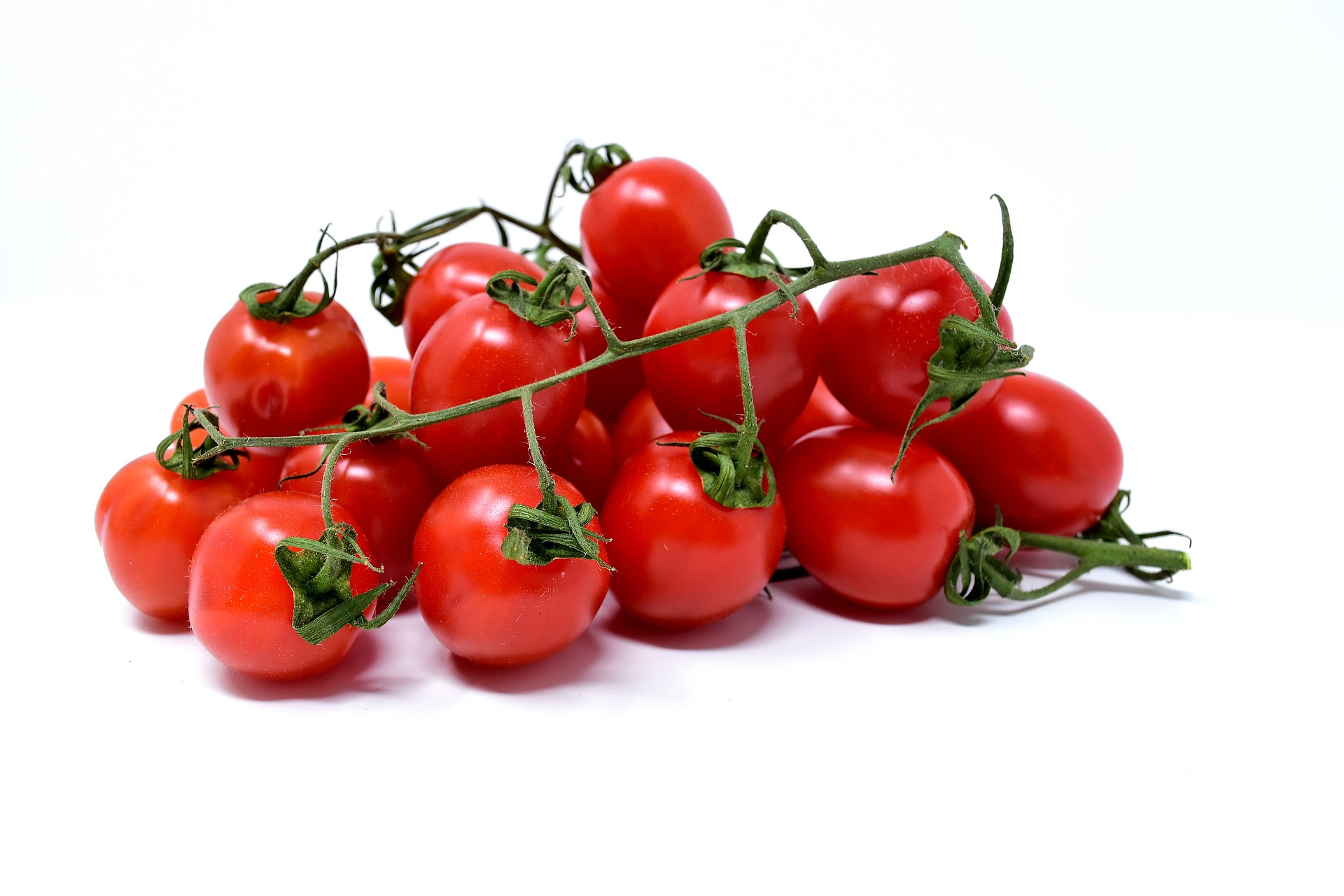
• Tomatoes (Solanum lycopersicum)

Tomatoes are a juglone sensitive crop

Fruits

• Apple (Malus domestica)
• Blackberry (Rubus)
• Blueberry (Cyanococcus)
• Pear (Pyrus)

Popular Landscape Plants

• Azalea (Rhododendron)
• White Birch (Betula papyrifera)
• Ornamental Cherries (Prunus avium)
• Crabapple (Malus)
• Honeysuckle (Lonicera)(some species)
• Hydrangea (Hydrangea macrophylla)
• Lilac (Syringa)
• Mountain Laurel (Kalmia latifolia)
• Rhododendron (Rhododendron)
• Yew (Taxus baccata)

Popular Garden Flowers

• Chrysanthemum (Chrysanthemum)(some species)
• Columbine (Aquilegia)
• Lily (Lilium)
• Peony (Paeonia)(some species)
• Petunia (Petunia)

Note: If proximity to a black walnut tree is unavoidable, raised garden beds offer a creative solution. However, the bed must be constructed in a way that minimizes or eliminates tree root penetration. These beds must also be kept free of black walnut leaf litter or nuts.

Juglone Tolerant Plant Species

The following plant species have exhibited tolerance to juglone:

Vegetables

• Lima Bean (Phaseolus lunatus)
• Beets (Beta vulgaris)
• Carrots (Daucus carota)
• Melon (Cucumis melo)
• Onion (Allium cepa)
• Parsnip (Pastinaca sativa)
• Squash (Cucurbita)

Fruits

• Black Raspberry (Rubus occidentalis)
• Cherry (Prunus avium)

Popular Landscape Plants

• Arborvitae (Thuja)
• Daphne (Daphne)
• Forsythia (Forsythia)
• Hemlock (Tsuga)
• Junipers (Juniperus)
• Persimmons (Diospyros virginiana)
• Rose of Sharon (Hibiscus syriacus)
• Wild Rose (Rosa)
• Virginia Creeper (Parthenocissus quinquefolia)

Persimmon species are tolerant to juglone

Popular Garden Flowers

• Begonia (Begonia x semperflorens-cultorum)
• Bergamot (Citrus bergamia)
• Chrysanthemum (Chrysanthemum)(some species)
• Cranesbill (Geranium)
• Shasta Daisy (Leucanthemum × superbum)
• Daylily (Hemerocallis)
• Ferns (Tracheophyta)
• Glory-of-the-snow (Chionodoxa siehei)
• Hyacinth (Hyacinthus)
• Lamb’s-ear (Stachys byzantina)
• Morning Glory (Ipomoea)
• Tulip (Tulipa)
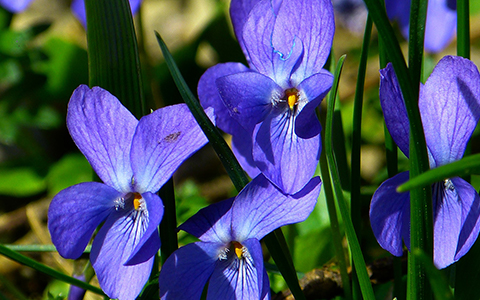
• Violet (Viola)

Tip: When in doubt about a plant’s tolerance to juglone, ask the garden center or nursery attendant for help.

Violet flower species are tolerant to juglone

Are Black Walnut Trees Toxic to Dogs?

Yes. They can be, when moldy (Penicillium spp.), fallen walnuts containing the mycotoxin (Penitrem A) that is poisonous to dogs and other animals that eat the moldy walnuts. Dogs, in particular, can develop convulsions a few hours after eating these moldy walnuts. Hyperthermia, rapid breathing, urination, and dilated pupils may also be seen in affected animals.

Tip: If you suspect that your dog has consumed these nuts, seek immediate veterinary assistance (take a sample of what was consumed with you to the vet’s office).

Killer Black Walnut Trees

In this article, you discovered essential information on black walnut toxicity, protecting your yard and garden space, and how removing the tree may not eliminate the problem.

Planting juglone tolerant plant species and keeping more vulnerable species far from the black walnut tree, you can still create a harmonious ecosystem for your landscape.

Ignoring the juglone toxicity symptoms of your plants, shrubs, and trees can leave you running in circles looking for reasons why your landscape is dying, and nothing you plant will grow.

Source link


from AAA Tree Lopping Ipswich https://ift.tt/q0uRnl7
via IFTTT

Thursday, August 11, 2022

How Soil PH Impacts the Health of your Trees

Trees need a variety of nutrients to stay healthy and grow. One important nutrient is nitrogen, which helps to produce chlorophyll and other vital compounds. However, nitrogen is only readily available to trees when the soil pH is between 6.0 and 7.0. When the soil pH is higher than 7.0, it becomes harder for trees to access the nitrogen they need. This can result in stunted growth, yellow leaves, and other symptoms of poor health. If you suspect that your tree’s soil has a high pH, you can have it tested by a professional. Once you know the pH of your soil, you can take steps to adjust it if necessary. For example, adding sulfur to the soil can help to lower the pH and make nitrogen more accessible to your trees. By taking care of your tree’s needs, you can ensure that it stays healthy and thrives for years to come.

High Soil pH: What does that mean for the health of your trees?

You have probably heard me talk about our naturally high soil pH at some point or another. This can be a problem for many of our trees in Sioux Falls. It is a principal reason this is called the prairie along with our natural weather patterns.

Understanding pH

pH is the measure of the concentration of Hydrogen Ions (H+) in a solution. The more Hydrogen the more acidic; the less H+, the more alkaline. pH is also a logarithmic measurement scale. It goes from 0 to 14 with 7 being neutral. What that means, is the amount of H+ ions in the solution or not in the solution, doubles (or 10-fold increases) the further away from 7 the pH is on the scale. For example, the alkalinity of 7.2 is double that of 7.1. And 7.3 is double of 7.2.

Why does this matter?

High soil pH (Alkalinity) changes the chemistry in the soil and binds up many micro-nutrients, making them unavailable for plants not naturally used to high soil pH. Trees and plants need those micro-nutrients like iron and manganese to make chlorophyll and other basic plant functions. It is a common misconception that Iron Chlorosis is an iron deficiency in the soil. When in actuality it’s absent in the plant because of the soil pH.

As a matter of fact, a similar situation is true on the Acidic side of the pH scale as well. In most of the United States (and North America) the soil pH is acidic (5.5 – 6.5). Therefore, most plants have evolved to deal with and thrive and grow in acidic soils (mostly trees). But, there are challenges there as well; Most food crops and forbs (flowers, clover, small annuals, and perennials that are not grass) prefer a more neutral or slightly alkaline soil to perform well. That is why you always will hear in most gardening books to add lime to your soil. That helps to raise soil pH. Sulfur will help lower soil pH.

If you look at an overall map of what naturally grew across the continent, you could roughly map out where the high soil pH and low soil pH are. Now I’m going to admit, that this is very grossly oversimplified. But, the point I’m trying to show, is that to have healthy trees in an ecosystem that historically was all grass, it has its challenges.

Iron Chlorosis is often thought to be an iron deficiency in the soil. When in actuality it’s absent in the plant because of the soil pH.

What can you do?

The first thing to remember is (due to a lot more chemistry explanations), that we can almost never permanently change a soil’s pH. We can move it up or down ways for a short time, but it will naturally balance back to where it traditionally has been. It’s called buffering capacity. And the soil buffering capacity in our Sioux Falls region is very strong.

But all is not lost. There are a few tricks and simple tips that you can follow to help your trees thrive in a prairie landscape.

  • Ammonium Sulfate (AMS) – This is a fertilizer used all the time in farming. It is made up of 21% Nitrogen, 0% Phosphorus, 0% Potassium, and 28% Sulfur (21-0-0-28S). For the life of me, I don’t know why more hardware stores and Garden centers don’t carry this in 50lb bags for use in flower beds and in yards. So it is hard to find locally, but if you go sweet talk at the co-op, you can get it there. And it is not expensive.
    1. Apply to trees under the drip-line at about 1-2 lbs per inch of trunk diameter. Mix it in if you can, but watering it in lightly can work.
    2. For flower gardens and lawns apply at about 20lbs per 1,000sq ft.
    3. This is best applied in early spring or late fall.
    4. Apply about once a year or every other year depending on your soil. Be careful not to add too much! Conduct a soil test periodically to make sure you are on par with what you are adding!
  • Add in organic matter to the soil! This is why you always hear me talk about mulch around your trees.
    1. Your soil test will tell you what percent of organic matter you have. Ideally, there should be around 7-8% organic matter in your soil.
    2. Adequate organic matter will result in less need to fertilize.
    3. Organic matter naturally buffers soil pH closer to neutral.
  • Be careful how you water.
    1. Too much water can raise a soil’s pH. This has been very prevalent this year with the high amounts of rain we have been getting.
    2. Trees prefer long waterings with large spaces in between. Lawn irrigation schedules are often too frequent and promote higher soil pH’s.
  • Last but absolutely not least, choose a tree that can handle the soils you have! The reality is we can try all we want to grow some types of trees here, but long term they will struggle because of how our soils are (function, structure, and pH).

In Closing

I think the largest message I wanted to get across with this article, is to help you understand why we have such limited variety of trees to choose from and why so many trees that people try and plant, struggle. So much of it is out of our hands because of where we live. But that doesn’t mean we can’t have nice plants, it just means we have to be smart and sometimes work a little harder. We need to carefully choose what we are planting and where we are planting it. pH is a huge reason why we have plant health issues, but with a few simple tweaks and considerations, it should be a major road black to healthy plants.


Source link


from AAA Tree Lopping Ipswich https://ift.tt/DJ1zQMK
via IFTTT

Avocado Pollination and Bees

It is well known that bees are responsible for pollinating a wide variety of flowers and plants. However, what is not as widely known is the vital role that bees play in the production of avocados. Avocado trees require a very specific type of pollination in order to produce fruit, and bees are the only creatures that can provide this type of pollination. Consequently, without bees, there would be no avocados. In addition to providing an essential service for avocado growers, bees also help to increase the yield of other crops, such as almonds, berries, and melons. In short, bees are a key player in the world of agriculture, and their importance cannot be overstated.

Bees and Avocado Trees: The Power of Pollinators

Thanks to their delicious taste, creamy texture, and the array of health benefits they provide, avocados have exploded in popularity over the last few decades. Formerly considered a delicacy for only the wealthiest among us, avocados are now a staple component in the diets of many. 

But unfortunately, avocado farmers are currently facing a number of challenges. One of the most significant is achieving sufficient fruit production from each tree. However, growers have potentially found a way to improve their yield. They just need help from a very special animal: the humble honeybee.

Read on to learn about the reasons that honeybees are providing a helping hand, and why your morning avocado toast may not be possible without the help of these six-legged saviors.

Avocado Trees at a Glance

The avocado tree (Persea americana) is originally native to Central America, but it is now grown in dozens of locations around the world. However, Mexico continues to be the epicenter of avocado production, as the country’s farmers produce about one-third of the global annual harvest.

Avocado trees grow best in warm climates, including tropical regions with ample yearly rainfall and places – like Southern California – with a Mediterranean climate, characterized by hot, dry summers and relatively mild, wet winters. Commercial avocado production obviously takes place outdoors, but individual consumers occasionally grow these plants indoors.

Avocado trees may reach 60 feet or more in height, although most remain smaller than this. They are clad in attractive, deep green leaves, and they are available in a number of different cultivars.

Avocado Flowers: Peculiar Pollination

Avocado trees produce an incredible number of very tiny flowers, measuring about 1 centimeter (roughly one-half inch) in diameter. Indeed, large individuals often bear one million flowers or more. However, only a very small subset of these flowers will set fruit – typically on the order of 100 to 200, although occasional trees may produce as many as 500.

The reasons avocado trees only produce a relatively small number of fruits aren’t entirely understood. However, it likely has to do with the strange flowers these trees bear and their unusual pollination mechanism.

Avocado flowers have male and female reproductive structures. However, they aren’t simultaneously functional – they function as males or females for a short time before closing up and reopening later, when they function as the opposite sex. After the second opening sequence has been completed, they close permanently.

Different avocado cultivars exhibit different pollination patterns. Some – known as Group A – function as female flowers in the morning, before reopening and functioning like male flowers in the afternoon. Cultivars in Group B exhibit the opposite trend. They function as male flowers and release pollen in the morning, before becoming receptive to pollen later in the afternoon.

This mechanism is often thought to have evolved as a way to prevent self-fertilization. Because the flowers on a given tree are typically functioning as one sex or the other at a given time, it is unlikely that a tree will fertilize itself. Instead, the pollen from one needs to reach the female flowers of another avocado tree.  This tends to make avocado tree pollination relatively inefficient. So, avocado farmers are increasingly seeking help from pollinating insects – specifically honeybees.

Honeybees Lend a Helping Hand

While honeybees don’t seem to have a particular affinity for avocado flower nectar, they can and do visit the flowers routinely. In doing so, they often transfer pollen from the male flowers of one tree to the female flowers of another, thereby achieving pollination and – in some cases – fruit set.

Honeybees aren’t the only insects that participate in avocado tree pollination, but they are among the most helpful. Additionally, given the fact that honeybees are widely available from apiculturists (beekeepers), they are easy to introduce to groves.

Historically, avocado farmers would install one or two honeybee hives per acre of avocado trees. But in recent years, farmers – and the university researchers who study the interrelationship between avocados and bees – have begun using more hives per acre. Currently, many farmers are using twice as many hives per acre, and some growers are using even more bees to achieve a good fruit set.

Some farmers have also begun tweaking their planting and maintenance practices to help the honeybees accomplish their work more efficiently. For example, some have begun altering their pruning practices. This is done in the hopes of keeping the grove more open, which provides better flight paths for the bees to move between trees.

Interestingly, honeybees appear to be more helpful in avocado tree farming in some places than others. For example, they’re often quite beneficial for growers in southern California, but they prove less helpful in places like New Zealand, where hand-pollination seems to be more effective.

One possible solution for these farmers may come from some of the relatives of honeybees. Some have begun experimenting with bumblebees, who’ve reportedly increased avocado yield in some locations, while others – including growers in San Diego County – have turned to New World Carniolan bees.


Source link


from AAA Tree Lopping Ipswich https://ift.tt/aod6biK
via IFTTT

Tuesday, August 9, 2022

Trees Help Fight Climate Change

Trees are an important part of the natural carbon cycle, and they play a vital role in mitigating climate change. When trees photosynthesize, they absorb carbon dioxide from the atmosphere and release oxygen back into the air. This helps to reduce the number of greenhouse gases in the atmosphere, and it can have a significant impact on regional climates. In addition to their carbon-sequestering abilities, trees also help to regulate temperature and moisture levels. They provide shade and shelter from wind, and their roots help to stabilize soils. As a result, planting trees can be an effective way to fight climate change. Not only do trees help to mitigate the effects of greenhouse gases, but they also provide other environmental benefits that can have a positive impact on the climate.

Does Planting Trees in your Yard Help Fight Climate Change?

It seems that every week there’s news directly related to climate change: historic heat in the West; 100-year floods on the Gulf Coast; earlier, more damaging hurricanes affecting the East Coast. And perhaps the most fundamental contributor to this climate chaos is increased carbon dioxide emissions.

Fortunately, there is a powerful weapon available to help combat climate change – reforestation. That’s a fancy name for the simple act of planting trees. Trees are a keystone species in the battle to reduce harmful atmospheric carbon dioxide. Trees are responsible for significant carbon sequestration – the safe storage of carbon dioxide — and for increased environmental stability.

An international research team that was part of the NASA global climate change initiative published a recent study in the journal Science estimating the global potential of restoring forested lands as a possible strategy for mitigating climate change. They determined that planting more than half a trillion trees worldwide could reduce atmospheric carbon dioxide by approximately 25 percent – enough to negate 20 years of human-generated carbon emissions at the current rate.

“That’s a lot of trees,” you’re thinking. “Can it really make a difference if I plant a couple in my yard?”

The short answer is “yes.” According to the USDA’s Arbor Day Foundation, a single mature tree can pull 48 pounds of carbon dioxide out of the atmosphere in one year while releasing much-needed oxygen in exchange. So every tree planted means more carbon dioxide is removed and less harm is done to the environment. Just imagine if everyone in your neighborhood planted just one tree.

And the benefits of planting a tree don’t stop there. Trees provide a number of other benefits, including helping manage stormwater and limiting erosion. Their root systems help stabilize and support the soil while their canopies provide shade and help keep our homes and yards cooler. Trees also provide food and shelter for birds and other wildlife, including the important pollinators who fertilize and help increase the numbers of other beneficial plants.

Being a good steward of the trees

As a homeowner, you have a responsibility to maintain your home and the landscape it sits on, and that includes the trees that grow there. Unfortunately, some homeowners don’t really “see” their trees. They often simply provide a green backdrop and only attract attention when they shed their leaves in the fall, causing many to grumble about all the raking and leaf-blowing that entails.

Mature trees can be even more difficult for owners to notice because everything happens up in the canopy, which is sometimes 25 or even 50 feet up in the air, requiring much craning of necks to see and inspect. But those big canopies are what add great value to your trees and it’s important to carefully maintain them – not just hack away at limbs that may be hanging over the house or a neighbor’s property. Or worse, just chopping them down without much consideration.

Being a good steward of the trees means learning a little bit about them, understanding such things as:

  • Sunlight Exposure: how much do they need to be happy and healthy?

  • Water Consumption: as my trees get bigger, will they be able to get the water they need?

  • Height & Width: how tall and wide will my trees get? Are my trees a good distance from any boundary lines and is there room for them to grow without causing problems down the road?

  • Maintenance: do my trees need a lot of regular maintenance such as trimming and pruning?

  • Benefits: what value do my trees provide and how do they help my property and the environment? What animals do they support?

Planting a tree to help the environment goes beyond simply sticking one in a hole in the ground. You should be mindful of the resources required to successfully select, transport, plant, nurture, and maintain that tree. Is your soil capable of supporting a full-grown tree or do you need to improve its quality so that it requires minimal use of fertilizers and other chemicals?

Remember that not all trees will grow equally well in your landscape. It’s important to pick compatible trees that will thrive in your location, not because you happen to like how they look. Work with your local landscape professional, arborist, or garden center to select the right tree and place it in the right location to maximize its chance for success, enabling it to grow and mature with minimal disruption or extra work.

Even if you have a small yard, you still have options for planting a tree. Small spaces require a level of restraint and a little extra planning, but the result can be extra-rewarding – it can provide beauty, a sense of roominess, and a source for relaxation in an otherwise relatively tight area. Once again, consider working with an expert on tree selection and planting to help you make the most of your space and options.

Trees are an astonishing yet under-appreciated resource and a key tool for tackling climate change. Scientists still have much to learn about trees and the complex role they play in nature. But one thing’s for sure – the world can use all the trees that we can plant.

Source link


from AAA Tree Lopping Ipswich https://ift.tt/KvDhe2d
via IFTTT